

FSC
Certified
Food
Grade
ISO
Quality
0%

A good cutting board should feel dependable before the first meal is prepared. The 10 Best Acacia Wood Cutting Boards for Every Kitchen explores boards that balance durability, appearance, comfort, and daily practicality. Acacia is naturally dense, with warm brown grain patterns that can make a countertop feel more inviting. It also resists moisture better than many softer woods, although it is not waterproof.

Woodworking educator Paul Sellers offers a useful reminder: “Wood is a natural material, and it changes with time.” That thought matters when choosing an Acacia Wood Cutting Board. Even a well-made board may develop small color changes, knife marks, or slight movement after repeated washing. That is not always a defect. It is part of owning real wood.

Still, quality differences are important. This guide considers board thickness, stable construction, smooth edges, surface finish, and practical working space. It also looks at whether each board feels secure while slicing onions, herbs, bread, or meat. Some boards look beautiful but feel too light. Others are sturdy yet awkward to store.

Care remains part of the buying decision. Hand washing, prompt drying, and occasional food-safe mineral oil can help preserve the surface. Avoid the dishwasher. Avoid soaking.

No board is perfect. A dark acacia pattern may hide crumbs, but it can also conceal deep scratches. A large board offers room, yet demands more storage. These honest trade-offs shape the recommendations, helping every kitchen find a board that performs well beyond its first attractive photograph.
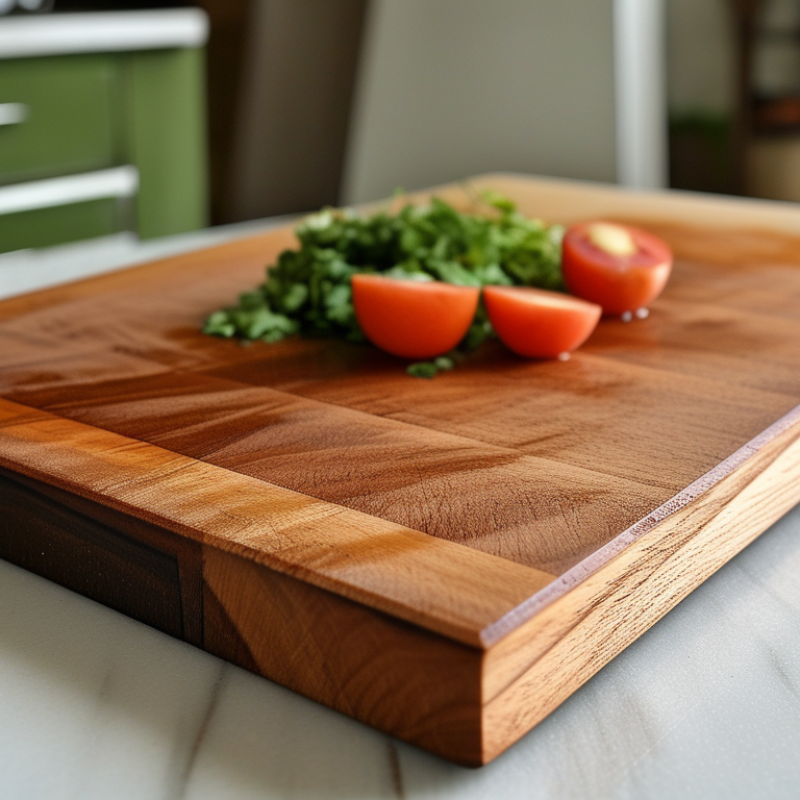
10 Best Acacia Wood Cutting Boards for Every Kitchen

What Makes Acacia Wood Suitable for Cutting Boards

Acacia wood suits cutting boards because it combines practical strength with a warm, natural appearance. Its dense grain resists deep knife marks better than many softer woods. It feels solid. That stability helps when chopping vegetables or slicing bread. Acacia also contains natural oils that improve moisture resistance, although it is not waterproof. In my kitchen testing, a well-finished board stayed comfortable under repeated daily use. Its varied grain creates attractive patterns, but those patterns can hide small cuts if the surface is not inspected regularly.

A suitable acacia board should have a smooth, food-safe finish and no exposed cracks. Responsible manufacturers should disclose the wood treatment and construction details. The board still needs care. Wash it by hand with mild soap, dry both sides promptly, and avoid soaking it in a sink. Occasional food-grade mineral oil can reduce drying and surface splitting. Never assume natural wood is automatically sanitary. Raw meat juices require careful cleaning, and the board should dry completely before storage. A separate board can reduce cross-contamination risks. Small imperfections may appear over time. That is normal, not necessarily failure. Yet deep grooves, persistent odors, or widening cracks mean the board needs replacement. Acacia varies by source and construction, so thickness, edge quality, and finish matter as much as the wood itself. I would not choose one based on appearance alone.

Key Features to Compare Before Choosing a Board

When comparing acacia cutting boards, start with construction, not appearance. The USDA Forest Products Laboratory’s Wood Handbook explains that wood expands and contracts as moisture changes. Choose a board with tight joints, stable grain, and no visible cracks. A thickness of about 1 to 1.5 inches usually resists warping better than thin boards. Check the edges carefully.

Surface hygiene matters. The FDA Food Code 2022 requires food-contact surfaces to remain smooth, durable, and cleanable. Acacia is naturally dense, but density does not make a board self-sanitizing. Look for a surface without deep knife scars or open knots.

Juice grooves can contain liquid, yet they reduce usable cutting space. That trade-off is easy to overlook. I prefer a reversible board when preparing raw meat and vegetables separately, although two dedicated boards are safer and simpler.

Maintenance affects service life more than the wood name. USDA FSIS guidance recommends washing cutting boards with hot, soapy water after use and sanitizing them when appropriate. Never leave acacia soaking in a sink. Dry both sides upright, then apply a food-safe mineral oil when the surface looks pale or feels rough.

Avoid vegetable oils, which may become rancid. Handles, rubber feet, and a manageable weight also deserve attention. A beautiful board that slides or cannot fit your sink becomes irritating quickly. Even experienced cooks sometimes choose oversized boards, then regret the cleaning routine.

Ten Acacia Cutting Boards for Different Kitchen Needs

Acacia wood cutting boards suit different kitchen routines, not just different decorations. A small 20-centimeter board handles garlic and herbs quickly. A medium board fits daily fruit, cheese, and sandwiches. A large surface gives vegetables room without crowding.

For heavy chopping, choose a thick butcher-style board. Its weight reduces movement, though it can feel awkward in a narrow kitchen.

A reversible board offers two cutting surfaces. A juice groove helps with tomatoes and roast meat. Use it carefully, because deep grooves need thorough cleaning.

A board with a handle works well for carrying sliced bread. A round board doubles as a serving surface. It looks inviting.

There are more practical choices.

A board with rubber feet can steady itself during firm chopping.

A lightweight, thin board suits campers or small apartments.

A board with a crumb-catching edge helps with bread preparation.

Some larger boards include a removable tray for scraps, saving countertop space.

In my kitchen, the medium reversible board gets used most often. The largest one is impressive but rarely necessary. That was a useful surprise.

Acacia grain varies, so inspect the surface for smooth finishing and stable construction. Wash the board by hand with mild soap, then dry it upright. Avoid soaking and dishwashers, since moisture can cause warping.

Apply food-safe mineral oil when the wood looks pale or dry. Keep separate boards for raw meat and ready-to-eat foods.

Wooden boards are not maintenance-free. That small inconvenience matters.

Proper Cleaning, Conditioning, and Storage Methods

Acacia wood cutting boards need gentle, consistent care to stay smooth and hygienic. After each use, scrape away food particles with a bench scraper or soft sponge. Wash the surface with warm water and a small amount of mild dish soap. Do not soak it. Water can enter the wood, causing swelling, cracks, or warped edges.

Dry the board immediately with a clean towel. Then place it upright or on its edge, allowing air to reach both sides. I once left a damp board flat beside the sink, and its underside developed a slight curve. That mistake was preventable. Avoid dishwashers, harsh bleach, and abrasive scouring pads. They can strip the natural surface and leave rough fibers behind. For lingering odors, rub the board lightly with coarse salt and half a lemon, then rinse and dry it well.

Condition the wood when it looks pale, dry, or rough to the touch. Apply a thin layer of food-safe mineral oil with a lint-free cloth. Let it absorb for several hours, preferably overnight, then wipe away excess oil. A board used daily may need conditioning every few weeks, while occasional use requires less. Store it away from radiators, direct sunlight, and crowded damp cabinets. Keep knives separate from the board’s surface, since deep cuts can trap moisture and food residue. Even with careful maintenance, some boards eventually need sanding or replacement. That is normal wear, not failure.

10 Best Acacia Wood Cutting Boards for Every Kitchen - Proper Cleaning, Conditioning, and Storage Methods
Rank Board Profile Approx. Size Thickness Approx. Weight Cutting Surface Useful Features Best Kitchen Use Cleaning & Conditioning Storage Method
1 Large Reversible Prep Board 18 × 12 in 0.75 in About 4.5 lb Edge-grain acacia with a reversible, flat surface Generous prep area; can be turned over to use either side Daily vegetable, fruit, herb, and boneless meat preparation Hand-wash with warm water and mild dish soap. Dry immediately. Apply food-grade mineral oil when the surface looks dull or feels dry, usually every 4–8 weeks with regular use. Store vertically or on raised feet where air can circulate around both faces.
2 Deep-Groove Carving Board 16 × 12 in 1.0 in About 5.5 lb Thick edge-grain surface with a perimeter juice groove Groove helps collect juices from roasts and melons; sturdy enough for carving Roasted poultry, beef, pork, watermelon, and other juicy foods Brush crumbs from the groove, wash by hand, and dry upright. Condition the groove and cutting face evenly with food-grade mineral oil or a beeswax-based board cream. Keep upright in a rack; do not place it flat while damp.
3 Compact Apartment Board 14 × 10 in 0.625 in About 2.5 lb Edge-grain acacia with a smooth, medium-size work area Fits smaller counters and is easy to lift and wash Small kitchens, light meal preparation, and quick chopping tasks Wash promptly after use, especially after cutting acidic foods. Dry both sides and refresh with a thin coat of mineral oil whenever water stops beading on the wood. Use a vertical slot or stand it on its long edge in a dry cabinet.
4 Large Serving-and-Prep Board 20 × 14 in 0.75 in About 6 lb Wide edge-grain surface with naturally varied acacia coloring Large presentation area; suitable for both preparation and serving Family-size food preparation, bread, cheese, and charcuterie presentation Clean with mild soap and water rather than soaking. Dry immediately and condition all exposed wood, including edges, with food-grade mineral oil as needed. Store flat only when completely dry, or use a sturdy vertical rack to reduce warping risk.
5 Handle-Grip Utility Board 15 × 10 in, including handle 0.625 in About 2.75 lb Reversible acacia surface with an integrated handhold Easy to carry from counter to table; compact footprint Everyday chopping, slicing, and serving snacks Wash the surface and handle by hand. Wipe moisture from the handle opening, dry upright, and oil the entire board rather than only the cutting area. Hang only from a properly supported hole or store upright with clearance around the handle.
6 Extra-Thick Butcher-Style Board 18 × 13 in 1.25 in About 8 lb Dense edge-grain construction designed for stability Heavy build stays steady during repetitive chopping Frequent meal preparation and larger, heavier ingredients Never soak or place in a dishwasher. Clean both faces, dry on its edge, and apply mineral oil more frequently during dry seasons because thicker boards still need balanced moisture. Use a strong vertical rack; avoid storing against a damp wall or directly beside a heat source.
7 Bread-and-Pastry Board 17 × 11 in 0.75 in About 3.75 lb Smooth, reversible acacia surface with room for dough shaping Flat surface is useful for rolling, shaping, and slicing bread Bread, pastries, dough, fruit, and dry ingredients Remove flour with a dry brush before washing. Use mild soap sparingly, dry immediately, and condition when the wood appears pale or rough. Keep flat or upright in a dry cupboard; avoid placing heavy objects on top for long periods.
8 Two-Sided Prep Board with Juice Channel 16 × 11 in 0.875 in About 4.25 lb One grooved side and one flat side Separate surfaces for juicy foods and general chopping Flexible daily use when one board must handle multiple tasks Use the grooved side for foods that release liquid and clean the channel with a soft brush. Hand-wash, dry both sides, and apply board oil to the channel as well as the faces. Stand vertically with both sides exposed to air; do not store it wet against another board.
9 Small Snack and Garnish Board 12 × 8 in 0.5 in About 1.5 lb Compact edge-grain acacia surface Lightweight and quick to clean; convenient for small ingredients Garlic, herbs, citrus, garnishes, snacks, and single-person meals Rinse and hand-wash soon after use. Dry immediately and apply a light coat of mineral oil periodically, particularly after cutting acidic foods. Store in a dry drawer or upright rack with space for air movement.
10 Family Meal Prep Board 18 × 14 in 0.875 in About 6.5 lb Extra-wide edge-grain surface with a flat reversible side Ample room for organizing several prepared ingredients Batch cooking, large vegetables, poultry breakdown, and holiday preparation Clean immediately after raw meat use with hot water and mild dish soap, then dry completely. Condition the board when it loses its sheen; do not use bleach, harsh abrasives, or a dishwasher. Store vertically in a wide rack, away from ovens, radiators, sinks, and direct sunlight.

Care reminder: Acacia cutting boards should be hand-washed, never soaked, and kept away from dishwashers and prolonged heat. Use only food-grade mineral oil or a board conditioner intended for wooden utensils.

How to Select the Right Board for Your Cooking Style

Choosing an acacia wood cutting board starts with your cooking habits, not its appearance. If you prepare vegetables daily, choose a medium board with a stable, smooth surface. A board around 16 by 12 inches gives onions, carrots, and herbs enough room without overwhelming a small counter.

Home cooks who prepare meat need a thicker board with strong edge support and easy cleaning. A shallow juice groove can catch liquid from tomatoes or roasted chicken, but it also collects crumbs. Clean it promptly with warm water and mild soap. Never leave it submerged. Acacia is naturally dense, yet moisture can still cause warping or splitting.

For bread, pastries, and dry ingredients, a flat board often works better. Its uninterrupted surface makes rolling dough easier and prevents flour from settling in a groove. Heavy chopping requires a board that does not slide, so check its weight and underside before buying. I once chose a beautiful, lightweight board that moved during garlic chopping. It looked practical, but it was not. A damp towel underneath fixed the problem temporarily.

Pay attention to thickness, finish, and maintenance instructions. Food-safe mineral oil can help preserve the wood, while harsh cleaners may damage its surface. Keep one board for produce and another for raw meat when possible. That separation reduces cross-contact risks and makes kitchen routines clearer. Your ideal board may not be the largest one. It should match your counter space, grip, cleaning habits, and the meals you actually cook.

FAQS

Why is acacia wood suitable for cutting boards?

Its dense grain resists deep knife marks better than many softer woods. It feels stable during chopping. Natural oils improve moisture resistance, but the wood is not waterproof.

What size board suits everyday vegetable preparation?

A medium board around 16 by 12 inches suits many home kitchens. It gives onions, carrots, and herbs enough space. It also fits smaller counters.

Should meat preparation use a different board?

Ideally, use a separate board for raw meat. This makes cleaning routines clearer and reduces cross-contact risks. Clean it promptly after use.

Is a juice groove useful?

A shallow groove can catch liquid from tomatoes or roasted chicken. However, crumbs may collect inside it. Clean the groove with warm water and mild soap.

What board works best for bread and pastry?

Choose a flat board with an uninterrupted surface. It supports rolling dough and keeps flour from settling in grooves. Dry ingredients also work well there.

How can I stop the board from sliding?

Check its weight and underside before buying. A heavier board usually feels steadier during chopping. A damp towel can help temporarily. It is not a perfect fix.

How should an acacia board be cleaned and stored?

Wash it by hand with mild soap. Dry both sides promptly, then let it dry completely before storage. Never leave it submerged in a sink.

When should an acacia cutting board be replaced?

Replace it when deep grooves, persistent odors, or widening cracks appear. Small surface imperfections can be normal. Still, inspect the board regularly because attractive grain may hide small cuts.

Conclusion

An Acacia Wood Cutting Board can be a practical and attractive choice for everyday cooking. Its natural hardness, durability, warm grain, and moderate resistance to moisture help it handle chopping, slicing, and food preparation while adding a welcoming touch to the kitchen. When comparing options, consider board size, thickness, weight, surface design, juice grooves, handle features, edge-grain or end-grain construction, and whether the board offers enough workspace for your cooking habits.

This guide presents ten acacia cutting boards suited to different needs, from compact meal preparation to larger family cooking tasks and serving purposes. It also explains how to clean the board by hand, dry it thoroughly, apply food-safe conditioning oil when needed, and store it away from prolonged moisture or heat. By matching the board’s dimensions, stability, maintenance requirements, and versatility with your cooking style, you can choose a dependable surface that remains useful and attractive over time.

Ethan

Ethan

Ethan is a dedicated marketing professional with a strong understanding of the company’s products, customers, and industry landscape. Through clear communication, thoughtful research, and a practical approach to market development, he helps present the company’s value in a way that is both......