

Choosing the right Teak Wood Salad Bowl can shape a wholesale buyer’s reputation, margins, and customer satisfaction. This guide examines ten practical options for restaurants, retailers, hospitality suppliers, and gift businesses. Each bowl deserves closer attention than a polished product photograph suggests.
R. Bruce Hoadley, a respected wood scientist and author of Understanding Wood, offered a useful warning: “Wood moves with moisture.” That short statement matters. Teak may resist moisture better than many hardwoods, but it is not maintenance-free. Buyers should inspect grain stability, wall thickness, surface smoothness, and the consistency of the food-safe finish. A bowl with rough inner fibers can trap dressing and complicate cleaning. Small details become costly at wholesale volume.
The best choices balance appearance with repeatable production. Look for responsibly sourced teak, clear care instructions, dependable packaging, and realistic sizing. A 12-inch bowl may suit shared salads, while smaller bowls can support retail bundles or hotel service. Weight also matters. Heavy bowls feel substantial, yet excessive weight can raise shipping costs and handling risks. Not every natural mark is a defect. Some variation gives teak its character. Still, deep cracks, unstable joints, strong chemical odors, or uneven rims deserve rejection.
This selection is not flawless. Supplier claims can be vague, and finish quality may vary between batches. Buyers should request samples before placing large orders. The following ten Teak Wood Salad Bowl options are evaluated through a wholesale lens, combining visual appeal, practical durability, care requirements, and purchasing reliability.
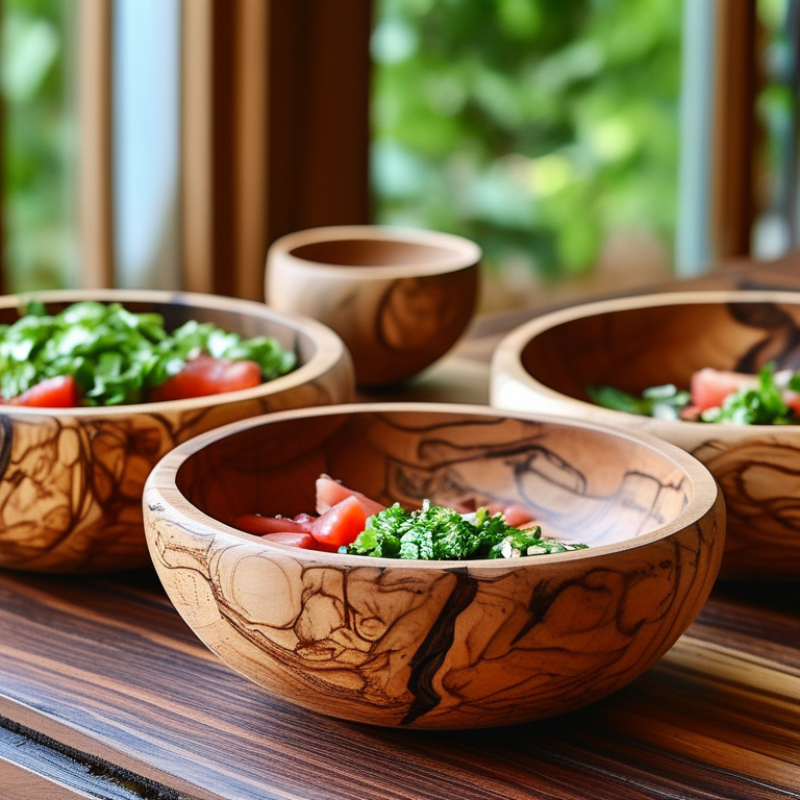
Teak wood is valued for salad bowls because it combines useful hardness, warm grain, and natural moisture resistance. The USDA Forest Products Laboratory’s Wood Handbook explains that wood expands and contracts as moisture changes. Teak generally moves less than many common hardwoods, helping a bowl remain stable during repeated washing and drying. Its reported Janka hardness is about 1,070 lbf, according to established wood-species engineering data. That strength helps resist shallow knife marks and dents during busy food service.
The tactile difference is practical. A well-finished teak bowl feels smooth, not slippery, and its close grain creates fewer rough edges around the rim. Natural oils also slow water penetration, but they do not make teak waterproof. No wood is maintenance-free. Wholesale buyers should request moisture-conditioned stock, consistent wall thickness, and food-contact-safe finishing materials. Small checks can appear when bowls dry too quickly, especially near the base.
Sourcing deserves equal attention. The FAO Global Forest Resources Assessment 2020 reports 294 million hectares of planted forests worldwide. That figure shows supply potential, not automatic sustainability. Buyers should still verify species documentation, harvest legality, plantation or forest origin, and chain-of-custody records. For a 10-piece or larger wholesale order, inspect sample bowls under bright light. Look for even sanding, stable feet, clean rims, and matching color. Perfect uniformity is unrealistic with natural wood, yet careless variation remains a quality problem.
| Rank | Bowl Style | Typical Dimensions | Approx. Capacity | Recommended Use | Wholesale-Relevant Features | Suggested Buyer Profile |
|---|---|---|---|---|---|---|
| 1 | Classic Round Serving Bowl | 30 cm diameter × 10 cm height | 4–5 L | Family salads, shared side dishes, buffet service | Wide opening, stable base, naturally varied grain, suitable for hand washing | Homeware retailers and hospitality suppliers |
| 2 | Large Deep Salad Bowl | 35 cm diameter × 13 cm height | 6–7 L | Large gatherings, catering, restaurant table service | Deep profile reduces spills, strong hardwood construction, high visual impact | Restaurants, caterers and event venues |
| 3 | Medium Everyday Bowl | 25 cm diameter × 9 cm height | 2.5–3.5 L | Daily family meals, fruit, vegetables and grain salads | Practical size, easy to store, durable surface and broad consumer appeal | Kitchenware and lifestyle stores |
| 4 | Nesting Bowl Set | 15–28 cm diameter; 4-piece set | 0.8–4 L total range | Preparation, serving, mixing and compact kitchen storage | Space-saving format, multiple selling units, useful for gift packaging | Gift shops, department stores and online sellers |
| 5 | Footed Presentation Bowl | 28 cm diameter × 15 cm total height | 3.5–4.5 L | Formal dining, buffet displays and decorative serving | Raised profile improves presentation, keeps the serving area visually distinct | Tabletop specialists and interior retailers |
| 6 | Oval Family Serving Bowl | 38 × 24 cm × 10 cm height | 4–5 L | Long tables, shared meals and rectangular dining settings | Efficient table placement, generous serving area, distinctive alternative to round bowls | Restaurants and contemporary homeware retailers |
| 7 | Small Individual Salad Bowl | 18 cm diameter × 7 cm height | 1–1.5 L | Individual salads, side dishes, snacks and breakfast bowls | Lightweight serving format, easy to merchandise in multiples, versatile household use | Cafés, casual dining operators and retailers |
| 8 | Sectioned Salad and Condiment Bowl | 28 × 20 cm × 7 cm height | 2–3 L combined | Salad components, toppings, dips and shared appetizers | Separate compartments improve presentation, supports multi-purpose table service | Entertaining and servingware retailers |
| 9 | Irregular Edge Artisan Bowl | 26–32 cm diameter × 9–12 cm height | 3–5 L | Rustic dining, premium gift collections and decorative displays | Each piece has natural variation, creating a handcrafted appearance and premium feel | Boutique retailers and curated gift stores |
| 10 | Extra-Large Catering Bowl | 40 cm diameter × 14 cm height | 8–10 L | Catering lines, hotel buffets and large-scale food presentation | High serving capacity, robust construction and strong visual presence on buffet tables | Hotels, banquet facilities and commercial caterers |
Check grain, wall thickness, rim smoothness, and base stability. Dense, even grain usually supports durability. Small knots may be acceptable. Large cracks are not.
Samples reveal sanding marks, uneven oil coverage, and size differences. Photos often hide these flaws. Wash and dry each sample. Inspect it again.
A 30-centimeter bowl may suit family dining or shared salads. A 20-centimeter bowl often fits cafés and smaller kitchens. Compare usable depth, not diameter alone.
Measure internal capacity, nesting efficiency, and carton size. Efficient nesting saves warehouse space. Poor packing increases breakage risks. Small measurement errors become expensive.
Ask whether the coating is suitable for food contact. Request cleaning, drying, and moisture-control instructions. Teak contains natural oils. Finish adhesion deserves close attention.
Request documented timber origin, harvesting information, and chain-of-custody records. Avoid vague sourcing claims. Traceability supports responsible purchasing decisions. Documentation matters.
Compare color range, weight tolerance, rim profiles, and packaging protection. Written standards help maintain consistency. Attractive samples can still fail during scale-up.
Include freight volume, rejected pieces, protective packaging, and replacement rates. A low unit price may hide later expenses. The cheapest quote is not always cheapest.
Start with a small pilot order. Wash, dry, stack, and inspect the bowls. Check raised grain, splits, odor, water absorption, and finish changes. Review the results honestly.
Natural variation may add character. Excessive differences can look defective to customers. Set an acceptable color range before ordering. I might still underestimate buyer expectations.
This guide explores why a Teak Wood Salad Bowl is a strong choice for wholesale buyers seeking durability, natural beauty, and practical performance. Teak’s dense grain, moisture resistance, and warm color make it suitable for frequent use in homes, restaurants, catering services, and hospitality settings. Buyers will learn which features to compare, including bowl size, shape, wall thickness, weight, finish, nesting options, and consistency across bulk orders. Popular styles range from simple round serving bowls to deep family-size designs and coordinated sets for flexible market appeal.
The article also explains how to assess quality, food-contact safety, craftsmanship, packaging, and responsible sourcing before placing a wholesale order. Checking for smooth surfaces, stable construction, secure finishing, and clear care instructions can help reduce returns and improve customer satisfaction. By matching bowl styles, price points, quantities, and design preferences with the needs of a target market, buyers can select teak salad bowls that offer lasting value while supporting a reliable and responsible product range.