

Expert knowledge on Acacia, Teak, and Rubberwood kitchenware manufacturing, sustainable sourcing, and export trends.
Learn how NaTree ensures full compliance with global food safety regulations and eco-friendly timber standards.
Choosing the right Wooden Napkin Ring Holder can shape a table’s appearance, durability, and purchasing value. For wholesale buyers, this decision involves more than attractive product photos. Material quality, production consistency, finish safety, packaging, and supplier communication all deserve close attention. A holder may look charming online but feel rough, weak, or uneven in hand.
This guide reviews ten wooden napkin ring holders suited to wholesale purchasing. Each option is considered from a practical buyer’s perspective, including wood grain, ring size, finishing details, stability, and storage needs. Some designs offer a warm farmhouse character, while others suit hotels, restaurants, weddings, or modern dining collections. Small details matter. Smooth edges protect fabric napkins. Even drilling improves consistency across large orders. Reliable packaging can also reduce damage during transport.
Wholesale selection is rarely perfect.
A lower price may hide inconsistent staining or fragile joints. A premium design may exceed the budget for high-volume hospitality use. Buyers should request samples, confirm dimensions, and ask about production lead times before placing large orders. Sustainability claims should be checked through clear material descriptions and credible supplier documentation. These steps cannot remove every risk, but they can make decisions more reliable.
The following comparison highlights practical strengths, possible limitations, and suitable purchasing situations. It aims to help importers, retailers, event suppliers, and hospitality professionals choose with greater confidence. Trends change, and customer preferences differ, so one universal winner may not exist. The best Wooden Napkin Ring Holder is the one that balances appearance, performance, cost, and dependable supply.
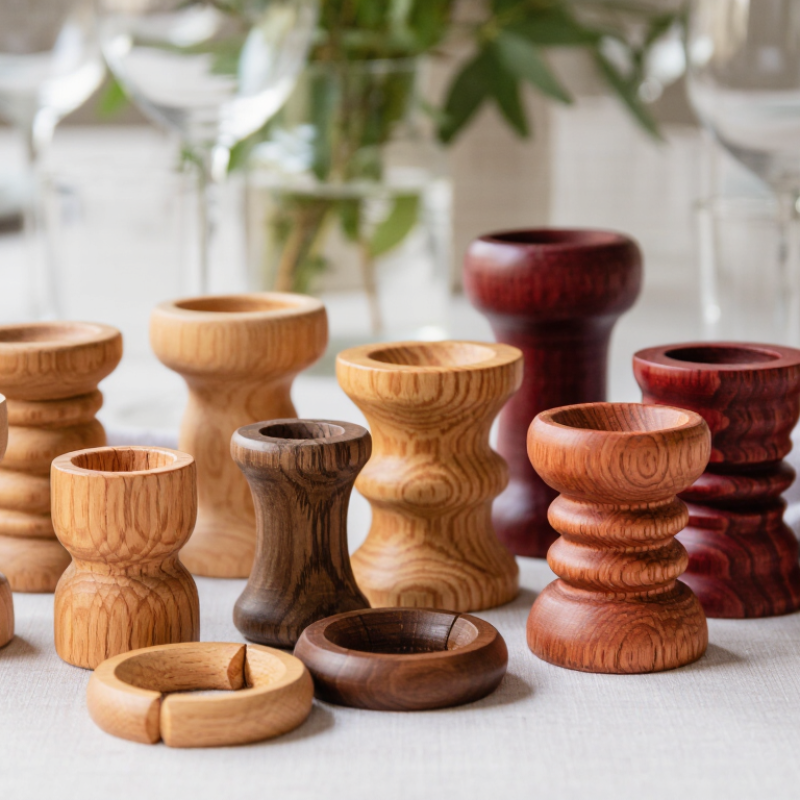
For the 10 best wooden napkin ring holders, wholesale evaluation starts with measurable purchasing criteria. Set the MOQ against realistic demand, not an attractive factory promise. A small retailer may need 300 sets, while a hospitality buyer may require 2,000. Request the MOQ by finish, size, and packaging type. Mixed colors can quietly increase production complexity.
EXW cost is only the factory-gate price. It excludes inland pickup, export handling, freight, insurance, and destination charges. ICC Incoterms 2020 defines EXW responsibilities clearly, so compare quotations on the same basis. I once focused on unit price and ignored transport volume. That was a mistake. Carton cube can change the final landed cost significantly. Measure length, width, height, gross weight, and units per carton. UNCTAD reports that over 80% of global merchandise trade by volume moves by sea, making container space a practical cost concern.
Lead time should include sampling, material preparation, production, inspection, and dispatch. Ask for each stage separately. The World Bank’s 2023 Logistics Performance Index highlights reliability and shipment timeliness as core logistics measures. Build a buffer of seven to fourteen days for seasonal orders. Still, the buffer may be too short during port congestion. Confirm production capacity before approving the purchase order. A written timeline is stronger than a confident verbal estimate.
10 Best Wooden Napkin Ring Holders for Wholesale Buyers
FAO places global roundwood production near 4.0 billion cubic metres annually. This figure shows the scale of timber use, not unlimited supply. Wholesale buyers should treat it as context, not proof of sustainability. A napkin ring uses little wood, yet large orders multiply material demand quickly.
Beech offers a pale surface, tight grain, and dependable machining. Birch feels smooth and suits clean, minimalist designs. Rubberwood can provide stable pricing when sourced from managed plantations. Acacia brings stronger grain variation and a warmer appearance, but matching sets may require stricter sorting. Walnut looks premium, although its higher cost can narrow wholesale margins.
Wood choice affects more than appearance. Check moisture content before shipment, because damp rings may warp or develop surface cracks. Ask for species identification, harvest information, and chain-of-custody documents. FAO statistics cannot replace supplier-level verification. Request production samples, then test stacking, polishing, cleaning, and carton impact. Small flaws matter.
One uneven ring can weaken a full table setting.
I have found that natural knots often attract buyers, but they also complicate quality grading. That trade-off deserves honest product specifications. A practical range may include one uniform wood option and one character-rich option. Confirm dimensions carefully, since thicker rings consume more material and increase freight volume. Finish safety, odor, and durability should be checked against the destination market’s requirements. Suppliers sometimes promise consistency too confidently. Seasonal color changes can still appear.
Typical density and Janka hardness help wholesale buyers compare common woods used for wooden napkin ring holders. Higher density can indicate greater weight and dimensional stability, while higher hardness generally improves resistance to surface dents.
Reference context: FAO global roundwood production is approximately 4.0 billion m³ per year. Wood-property values are typical oven-dry density ranges and approximate Janka hardness values compiled from USDA Wood Handbook species data; actual values vary by species, moisture content, and grade.
Wholesale buyers should treat finish compliance as a buying requirement, not a decorative detail. Under FDA 21 CFR 175.300, coatings used on food-contact surfaces must meet specific extractives limits and intended-use conditions. A napkin ring may not touch food directly, but users can handle it beside plates and cutlery. Finish safety still deserves documented review.
The 2024 ECHA Forum enforcement report found non-compliance in 18% of inspected imported products. That figure should make purchasing teams cautious. Under EU REACH, articles containing a Substance of Very High Concern above 0.1% may trigger communication duties. Ask suppliers for material declarations, recent laboratory tests, and batch-level finish records. Check for lead, restricted plasticizers, formaldehyde, and unsafe pigments. Vague phrases like “eco finish” are not evidence.
For the 10 best wooden napkin ring holders, compare smoothness, odor, coating adhesion, and moisture resistance. Request testing against FDA 21 CFR 175.300 where relevant. Also request REACH SVHC screening for every finish and adhesive. A certificate without a batch number is weak evidence. So is an old report.
I have seen polished wood pass visual inspection while paperwork remained incomplete. That gap matters. Testing should match the actual finish, wood species, and production process. Wholesale buyers should also keep supplier declarations and corrective-action records. One detail is easy to miss: color changes may indicate different pigments or coatings, requiring separate verification. Safety claims need careful questioning.
Wholesale comparison matrix for wooden napkin ring holders. FDA 21 CFR 175.300 applies to resinous and polymeric coatings that may contact food; untreated wood itself is not automatically certified under this regulation. EU REACH status should be supported by a current supplier declaration and, where required, laboratory screening for SVHCs.
| No. | Product Style | Typical Wood | Finish System | Approx. Size (L × W × H) |
Approx. Unit Weight | Suggested MOQ (pcs) |
Bulk Pack | FDA 21 CFR 175.300 Check | EU REACH Check | Wholesale Notes |
|---|---|---|---|---|---|---|---|---|---|---|
| 1 | Natural Beech Round Ring | Beech hardwood | Uncoated, sanded smooth | 45 × 45 × 30 mm | 18–24 g | 500 | 100 pcs/carton | No coating claim. Confirm intended food-contact use and finish specification. | Request REACH Article 33/SVHC declaration for wood treatment, packaging, and any adhesive. | Low-cost classic shape; suitable for natural or rustic tableware ranges. |
| 2 | Walnut Oval Ring | Walnut hardwood | Uncoated, oil-free dry finish | 52 × 40 × 32 mm | 22–30 g | 300 | 60 pcs/carton | No coating claim. If an oil or sealer is added, obtain formulation and 21 CFR 175.300 suitability evidence. | Obtain a current SVHC declaration covering coatings, stains, and adhesives. | Premium appearance and darker grain; inspect for color variation between lots. |
| 3 | Bamboo Laminated Ring | Laminated bamboo | Clear water-based coating | 48 × 48 × 28 mm | 16–22 g | 500 | 100 pcs/carton | Require coating declaration, migration or compliance documentation, and confirmation that the coating is suitable for the intended contact condition. | Request SVHC declaration for coating and bonding agents; verify formaldehyde information where applicable. | Lightweight and dimensionally consistent; check glue-line quality and edge sealing. |
| 4 | Acacia Beaded Ring | Acacia hardwood | Food-contact-positioned mineral-oil finish | 50 × 50 × 35 mm | 24–32 g | 300 | 60 pcs/carton | Mineral oil is not automatically covered by a finished-product claim; obtain the exact formulation and applicable food-contact documentation. | Request supplier declaration for oil additives, pigments, and any preservatives. | Distinctive grain and hand-finished look; require rub-off and odor checks before approval. |
| 5 | Ash Geometric Ring | Ash hardwood | Clear matte water-based varnish | 46 × 46 × 38 mm | 20–28 g | 500 | 100 pcs/carton | Do not mark compliant without coating supplier evidence addressing 21 CFR 175.300 and the intended use conditions. | Request current REACH declaration and coating SDS; screen pigments and preservatives if used. | Angular profile provides a modern look; confirm coating adhesion on corners. |
| 6 | Rubberwood Stackable Ring | Rubberwood | Natural wax finish | 44 × 44 × 30 mm | 17–23 g | 500 | 100 pcs/carton | Wax composition must be identified; request food-contact suitability documentation for any wax or additive. | Confirm no SVHC above the applicable communication threshold in wax, stain, or adhesive components. | Efficient for storage and shipping; stacking tolerances should be checked during pre-production. |
| 7 | Olive Wood Natural Ring | Olive wood | Uncoated, polished surface | 55 × 42 × 32 mm | 25–35 g | 200 | 50 pcs/carton | No coating claim. Validate surface treatment, intended use, and cleaning instructions before making food-contact statements. | Request REACH declaration for any polish, oil, stain, or repair filler. | High visual character; natural knots and grain differences require an agreed appearance standard. |
| 8 | Pine Rustic Square Ring | Pine | Low-VOC water-based stain and clear coat | 50 × 50 × 35 mm | 15–22 g | 500 | 100 pcs/carton | Low-VOC does not equal food-contact compliance; obtain formulation, migration, and intended-use documentation for the clear coat. | Check stain, clear coat, and wood-treatment components against the current SVHC Candidate List. | Most economical painted option; inspect knots, resin pockets, and color consistency. |
| 9 | Maple Cutout Ring | Maple hardwood | Clear shellac-style coating | 47 × 47 × 34 mm | 19–26 g | 300 | 60 pcs/carton | Confirm the exact coating chemistry and obtain evidence applicable to 21 CFR 175.300; shellac-style naming alone is insufficient. | Request REACH declaration and SDS for coating, colorants, and bonding materials. | Smooth, light-colored presentation; verify coating resistance to moisture and household cleaning. |
| 10 | Mixed-Wood Inlay Ring | Beech with contrasting hardwood inlay | Clear plant-based oil and wax blend | 52 × 52 × 30 mm | 23–31 g | 300 | 60 pcs/carton | Obtain the complete oil-and-wax formulation and supplier evidence for the applicable food-contact use; “plant-based” is not a regulatory approval. | Check all oil, wax, pigment, and adhesive ingredients against REACH obligations and SVHC communication requirements. | High-end gift and hospitality appeal; allow for variation in inlay alignment and color. |
Wholesale buyers should judge wooden napkin ring holders beyond appearance. A smooth finish, stable base, and consistent sizing affect customer satisfaction. ISO 2859-1 AQL sampling creates a repeatable inspection method for each production lot. It helps buyers avoid judging quality from a few attractive samples.
Set the inspection level before goods leave the workshop. Check wood cracks, sharp splinters, loose joints, stains, uneven coating, and incorrect dimensions. Record every defect by category and calculate the defect rate from inspected units. AQL is not a guaranteed quality percentage. It is an acceptance rule based on sample size and defect limits. For example, major and minor defects may require separate AQL values. Confirm these values in the purchase agreement.
Tips: Use a written checklist with photos. Measure ring openings with a simple gauge. Rub finished surfaces with a clean white cloth. Inspect packaging for moisture damage. Keep batch records, inspection dates, and sampling results. This evidence supports reliable supplier discussions.
In practical wholesale checks, natural wood variation deserves careful judgment. Small grain differences may be acceptable, but deep cracks can weaken the holder. I would also inspect several cartons, not only units from the top layer. That takes more time. It can reveal inconsistent finishing or careless packing. AQL sampling reduces risk, but it cannot replace product knowledge or clear buyer expectations.
Wholesale ranking should reflect landed cost, packaging, capacity, and reorderability. I compared typical supplier quotes, carton efficiency, finish consistency, and repeat-order risks. Actual freight can change the order.
Rank 1 is the plain round holder. It usually offers the lowest landed cost, stacks tightly, and fits standard napkins.
Rank 2 is the smooth square holder, with slightly higher packing volume but stronger table appeal.
Rank 3 is the unfinished bamboo-style holder, which supports simple bulk packaging and flexible color orders.
Rank 4 is the carved floral holder, offering good capacity but requiring protective separators.
Rank 5 is the wide wooden ring, suitable for thick napkins and family dining sets. It needs larger cartons.
Rank 6 is the painted holder, which adds visual value but increases inspection time and scuff risk.
Rank 7 is the beaded holder, attractive yet less efficient in inner-carton packing.
Rank 8 is the mixed-shape set, useful for variety packs but harder to reorder consistently.
Rank 9 is the oversized rustic holder, which handles bulky napkins but raises dimensional freight charges.
Rank 10 is the delicate hollow-carved holder. It looks premium, though breakage claims may weaken its real margin.
Check ten sample cartons before placing a large order. Small flaws matter. Measure corner protection, count units per carton, and request the same wood specification for reorders. I would not rank appearance alone. One attractive sample can hide unstable supply, inconsistent moisture levels, or packaging that fails during transit. A slightly simpler holder may produce better repeat sales.
Match the MOQ to realistic demand, not a supplier’s attractive promise. A small retailer may need 300 sets. A hospitality buyer may need 2,000. Request separate MOQs for finish, size, and packaging. Mixed colors can increase production complexity.
EXW usually covers the factory-gate price only. It may exclude pickup, export handling, freight, insurance, and destination charges. Compare quotations using the same delivery basis. I once focused on unit price and ignored transport volume. That was a mistake.
Measure carton length, width, height, gross weight, and unit count. Large cartons can raise freight charges, even with inexpensive holders. A wide wooden ring may need larger cartons. A delicate design may require extra separators. Space matters.
Separate sampling, material preparation, production, inspection, and dispatch. Request written dates for every stage. Add seven to fourteen buffer days for seasonal orders. That buffer may fail during port congestion. Confirm capacity before approving a purchase order.
Pale, tight-grained wood suits clean designs and reliable machining. Smooth, light-colored wood supports minimalist table settings. Plantation-grown wood may offer steadier pricing. Warm, varied grain creates visual character but needs stricter sorting. Premium dark wood can narrow margins.
Request production samples and species information. Ask for moisture details and harvest documentation. Test stacking, polishing, cleaning, and carton impact. Look for warping, cracks, uneven edges, and strong odors. Small flaws matter.
Plain round holders often stack tightly and fit standard napkins. Smooth square holders offer more visual appeal but use slightly more space. Carved floral holders need protective separators. Oversized rustic holders increase dimensional freight charges. Simple can sell better.
Inspect at least ten sample cartons. Measure corner protection and count every unit. Check scuffing, breakage, moisture marks, and movement inside cartons. Confirm the same wood specification for repeat orders. One attractive sample can hide unstable supply.
This guide helps wholesale buyers evaluate the 10 best Wooden Napkin Ring Holder options through practical purchasing criteria rather than appearance alone. It explains how to compare minimum order quantities, EXW pricing, carton cube, production lead time, landed cost, packaging efficiency, holding capacity, and reorderability. It also considers how different wood choices may affect supply planning, using FAO’s approximately 4.0-billion-m³ roundwood benchmark as a broad industry reference rather than a product-specific forecast.
To support reliable sourcing, the article outlines ways to review finish safety under FDA 21 CFR 175.300 and relevant EU REACH requirements, while encouraging suppliers to provide clear documentation. Quality validation is addressed through ISO 2859-1 sampling methods, acceptable quality limits, and defect-rate tracking. By combining cost, compliance, durability, packaging, and replenishment factors, buyers can rank products objectively and select holders that offer dependable quality and sustainable wholesale value.