

A Rubberwood Serving Tray is a practical piece of tableware made from rubberwood, the timber of mature rubber trees. These trees are commonly harvested after their latex-producing life ends. Instead of becoming waste, the wood can be processed into useful household products.
The tray feels warm beneath a coffee cup. Its close grain offers a smooth, pleasant surface. Many designs include raised edges, recessed handles, or a shallow lip for safer carrying. According to rubberwood researcher Dr. P. K. Thulasidas, “Proper processing determines rubberwood’s service value.” This point matters. Kiln drying, preservation, sanding, and finishing strongly affect durability and hygiene.
Why buy one? A Rubberwood Serving Tray can carry breakfast, afternoon tea, pastries, or small bowls without looking overly formal. Its natural color suits kitchens, dining rooms, and relaxed hospitality. Rubberwood is also generally lighter than many hardwood alternatives, making a full tray easier to lift.
Still, it is not indestructible. Water can stain unfinished surfaces. Excessive heat may damage the coating. A poorly made tray may warp or develop rough edges. That is why buyers should inspect the grain, handles, finish, and joint quality before purchasing.
Choose carefully. The best tray balances appearance, strength, safe finishing, and everyday comfort. Its sustainability story is meaningful, but only when responsible manufacturing supports it. A beautiful tray alone cannot guarantee good materials or ethical production.
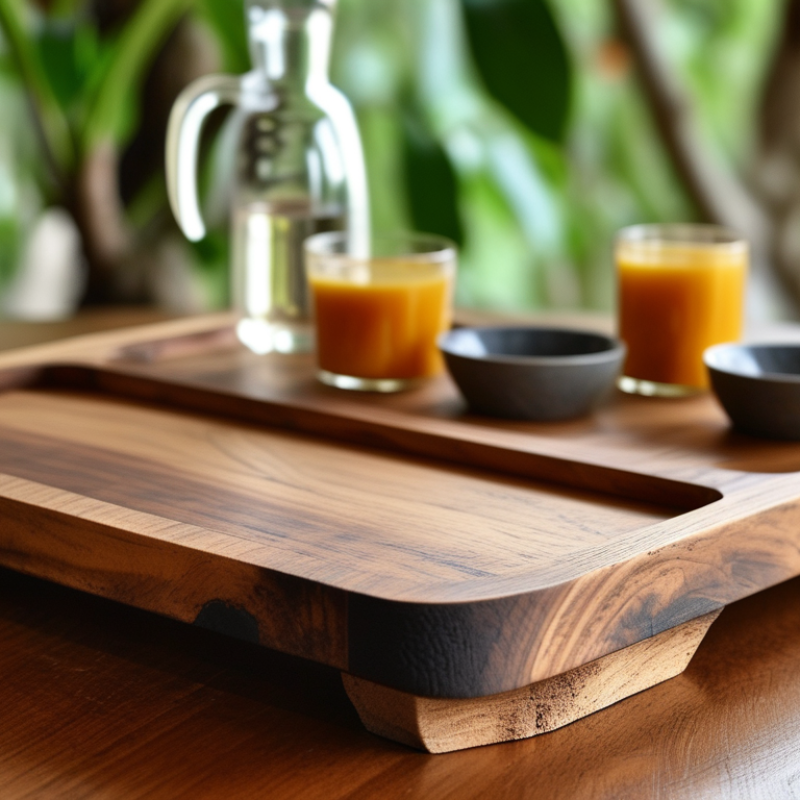
A rubberwood serving tray is a flat carrying surface made from rubberwood, the timber of mature rubber trees. These trees are usually harvested after their latex-producing years end. The wood is then kiln-dried, cut, and joined into panels for tray production. This gives the material a practical second use instead of leaving it unused.
Most rubberwood trays have raised edges or built-in handles. They can carry breakfast, tea, snacks, or several small dishes across a room. The surface often feels smooth and lightly warm under a ceramic cup. Rubberwood has a fine, even grain, so it accepts protective finishes and is easy to clean. In regular household use, I find its moderate weight more comfortable than thick hardwood trays.
A good tray should feel stable when lifted with one hand. Check that the handles do not flex and that the corners feel smoothly sanded. Look for a finish described as suitable for food contact, especially when serving uncovered fruit or bread. The tray is not perfect. Water can enter joints, and prolonged soaking may cause swelling or cracks. Wipe spills promptly, wash with a damp cloth, and dry it upright. Avoid placing very hot cookware directly on the wood unless the care instructions allow it. Some trays may also warp in damp kitchens, a detail that is easy to overlook.
| Data Dimension | Typical Rubberwood Serving Tray Information | Why It Matters | Buying or Use Consideration |
|---|---|---|---|
| Material identity | Rubberwood is the wood of the rubber tree, Hevea brasiliensis, commonly harvested after the tree has completed its latex-producing cycle. | It provides a useful second life for plantation-grown trees that might otherwise be discarded or used for lower-value purposes. | Look for clear information about wood origin and responsible forestry practices. |
| Hardness and durability | Rubberwood has a Janka hardness of approximately 960 lbf, placing it in the medium-hard range for common indoor furniture woods. | It is generally suitable for serving trays and can resist normal light-to-moderate household use. | Avoid dragging heavy cookware across the surface and inspect the tray for cracks or weak joints. |
| Appearance | The wood is usually pale cream to light brown, with a relatively fine, even grain. It accepts stains and clear finishes well. | The neutral appearance works with modern, rustic, Scandinavian, and traditional interiors. | Choose a natural finish for a lighter look or a sealed stained finish for stronger color and added surface protection. |
| Common tray sizes | Typical rectangular trays measure about 40–55 cm long and 25–35 cm wide. Smaller trays are often around 30–40 cm long. | Size affects how many cups, plates, or bowls can be carried safely. | Measure the table, cupboard, or serving area before purchasing, especially if storage space is limited. |
| Typical construction | A tray may be made from a solid wood panel, edge-glued boards, or laminated sections, with raised edges and integrated or attached handles. | Raised edges help reduce spills, while handles improve grip and balance during transport. | Check that handles are firmly attached, corners are smooth, and the tray does not wobble on a flat surface. |
| Weight and portability | Rubberwood is a moderately dense hardwood, so trays are usually more stable than lightweight plastic trays but heavier than many thin bamboo designs. | The added stability can make drinks and dishes feel more secure while being carried. | Consider tray weight if it will be used by children, older adults, or anyone with limited hand strength. |
| Food-contact suitability | A finished wood tray can hold cups, plates, and packaged or plated food when the surface coating is intended for that use and fully cured. | A suitable finish helps limit moisture absorption and makes routine cleaning easier. | Follow the product’s finish instructions and avoid using an unsealed surface for wet or oily foods. |
| Cleaning method | Wipe with a damp cloth and mild dish soap, then dry immediately. Do not place a wooden serving tray in a dishwasher or leave it submerged. | Limiting water exposure helps reduce swelling, cracking, finish damage, and joint separation. | Keep the tray away from prolonged heat, direct sunlight, and standing water. |
| Maintenance | Depending on the finish, occasional application of a food-safe wood conditioner may help maintain the appearance of an unfinished or oil-finished surface. | Regular care can help prevent the wood from becoming excessively dry or dull. | Use only a conditioner compatible with the existing finish and follow its application instructions. |
| Environmental consideration | Using rubberwood after latex production can improve the material’s overall resource efficiency, but environmental performance depends on forestry, processing, adhesives, and finish. | The material can be a sensible alternative to products made from newly harvested slow-growing hardwoods. | If sustainability is important, check for credible forest-certification information, low-emission finishes, and durable construction. |
| Best uses | Suitable for serving breakfast, tea, coffee, snacks, desserts, and drinks, as well as organizing small household items. | Its flat surface, raised edges, and handles combine practical serving with decorative storage. | For very hot cookware, use a heat-resistant trivet unless the manufacturer specifically states that the finish is heat-safe. |
It is a flat tray made from mature rubber trees after their latex-producing years end. The wood receives a practical second use.
Use it for toast, fruit, pastries, cups, breakfast, tea, or small dishes. It is not a cutting board.
Measure your table and consider your usual load. A 16-inch tray may hold two mugs and small plates.
Choose raised edges, secure handles, and a stable underside. The tray should feel balanced, even when empty.
Remove crumbs, then wipe it with warm water and mild dish soap. Dry both sides with a clean towel.
Avoid soaking and dishwashers. Standing water can enter seams, causing swelling, cracking, or rough patches.
Avoid direct heat unless the care instructions allow it. Hot pans may discolor the wood or loosen joints.
Inspect handles, corners, joints, and hidden surfaces regularly. Keep it dry. Unfinished wood may need a thin layer of food-safe mineral oil.
Do not judge only by appearance. I once chose shallow edges, and a cup nearly slid off. Small details matter.
A Rubberwood Serving Tray is a practical and attractive household item made from rubberwood, a light-colored hardwood commonly collected after rubber trees complete their productive life. The wood is carefully processed, dried, and shaped to create a stable tray with a smooth surface, natural grain, and comfortable handling. Its renewable source, durability, moderate weight, and warm appearance make it suitable for serving drinks, breakfast, snacks, or organizing everyday items.
When choosing a Rubberwood Serving Tray, consider its size, shape, handle design, weight, surface finish, and overall construction. Select a tray that fits your intended use and provides enough space without being difficult to carry. For safe and lasting use, wipe it with a soft, damp cloth and mild soap, then dry it promptly. Avoid soaking, harsh cleaners, dishwashers, and prolonged exposure to moisture or extreme heat. Occasional food-safe conditioning can also help maintain the wood’s appearance and prevent excessive dryness.