Choosing a reliable China Top Wooden Bread Box Supplier for Wholesale requires more than comparing prices. A Wooden Bread Box must protect loaves while supporting airflow, hygiene, and attractive kitchen presentation. Buyers should examine wood species, moisture content, surface finishes, hinge quality, ventilation design, and packaging strength. These details affect durability during storage and international shipping.
Bread expert Peter Reinhart offers a useful reminder: “Bread needs protection from drying, but it also needs room to breathe.” This principle explains why a well-designed wooden box should not seal bread like an airtight container. A slatted lid, small ventilation openings, or a carefully fitted cover can help balance softness and airflow. Still, no bread box prevents staling completely. That limitation deserves attention.
Experienced wholesale buyers should request material samples, production photos, and test reports before placing large orders. Food-contact-safe finishes matter. So do stable dimensions, smooth edges, and easy cleaning. A professional supplier should explain minimum order quantities, customization options, lead times, and quality-control procedures clearly. Factory experience with export packaging is equally valuable. A beautiful prototype means little if corners arrive chipped.
China offers broad manufacturing capacity, but quality varies between workshops. Some suppliers focus on low prices and overlook finishing consistency. Others provide stronger joinery, private labeling, and dependable inspections. This guide examines practical selection criteria for importers, retailers, hospitality brands, and kitchenware distributors. The goal is not simply to find a cheap Wooden Bread Box. It is to find a supplier whose materials, workmanship, communication, and delivery performance can withstand real wholesale expectations.
Wooden Bread Boxes: Purpose, Design, and Material Basics
Wooden Bread Boxes: Purpose, Design, and Material Basics
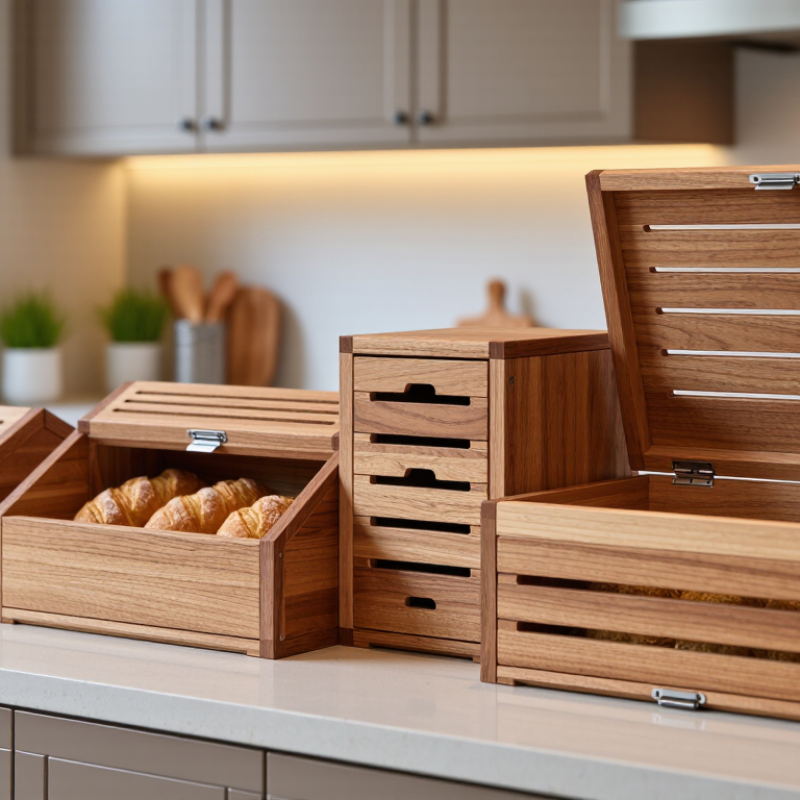
A wooden bread box protects loaves from direct light, dust, and excessive kitchen moisture. It does not make bread last forever. Bread still needs suitable storage conditions. A well-designed box balances airflow and protection. Small ventilation gaps help release moisture without exposing the loaf completely. Without airflow, warm bread may develop a damp surface and spoil faster.
Material choice affects durability, appearance, and maintenance. Solid beech, rubberwood, bamboo, and quality plywood are common options. Dense wood feels stable, while plywood can reduce warping when properly made. Food-safe finishes should be fully cured before use. Smooth interior surfaces also prevent crumbs from collecting in rough corners. Keep it simple. A box should be easy to wipe, open, and inspect.
For wholesale buyers, details matter more than photographs. Check lid alignment, hinge strength, edge sanding, and coating consistency across samples. Test the box with different loaf sizes, including sliced bread and wider artisan loaves. I have found that attractive designs sometimes sacrifice usable space. That mistake is easy to miss during early sampling. Moisture content, packaging protection, and carton drop testing deserve equal attention. A reliable supplier should provide clear material specifications, repeatable dimensions, and honest production tolerances. Minor natural grain differences are normal, but loose joints and sharp edges are not.
Key Features of a Reliable Wholesale Bread Box Supplier
A reliable wholesale bread box supplier should prove more than low pricing. In practical sourcing, the key checks are material, construction, and food-contact-safe finishing. Solid wood or bamboo should be dry, stable, and free from strong chemical odors. Smooth edges matter when staff handle many units daily. Ventilation slots can reduce trapped moisture. A firm lid protects loaves without crushing them. Ask for a physical sample before approving a large order.
Details matter. Supplier experience appears in small production decisions. The supplier should provide clear dimensions, carton counts, timelines, and inspection records. A dependable factory can explain its wood source and moisture-control process clearly. Check hinge alignment, sliding panels, sanding quality, and odor after unpacking. Drop-testing the export carton is also sensible. It can reveal weak corners hidden by product photos. Communication should remain consistent when specifications change. Silence during revisions is a warning sign.
For wholesale buyers, flexible customization can support retail, hospitality, and gift packaging needs. However, customization should not weaken structure or delay delivery. Confirm logo methods, color samples, replacement terms, and batch tolerances in writing. A China-based supplier with export experience should use protective wrapping and moisture-resistant cartons. No supplier gets every shipment perfect. The useful question is how defects are recorded, corrected, and prevented. I would still leave room for improvement, especially in finish consistency across large batches. Reliability is built through evidence, not confident claims.
How Wooden Bread Boxes Are Made and Quality Tested
A reliable wooden bread box begins with carefully selected timber, not attractive packaging. Manufacturers inspect boards for stable grain, low moisture, knots, and surface cracks. Kiln-dried wood is usually measured before cutting. This step reduces later swelling and gaps. It is not perfect, though. Natural wood can still react to humid kitchens. Experienced workers allow the material to rest before machining. They cut panels, sand edges, and shape ventilation openings with controlled tools. Each corner should feel smooth, without sharp splinters.
Assembly quality depends on joint accuracy and safe finishing. Panels are aligned on a flat jig, then fixed with food-contact suitable adhesive or mechanical fasteners. Excess adhesive is removed before curing. The lid should open quietly and sit evenly. A poor fit traps moisture. A loose fit dries bread too quickly. Factory inspectors check dimensions, hinge movement, stability, and visible defects. They also examine the interior, where rough fibers are easy to miss. Small details matter.
Quality testing continues after assembly. Samples are weighed, measured, and checked for warping under controlled humidity. Inspectors rub the surface with a clean cloth to detect dust, loose fibers, or uncured finish. Batch records should identify timber, production date, and inspection results. For wholesale buyers, carton drop tests and repeated lid cycles reveal packaging and durability problems. These tests cannot predict every household condition. A box may pass inspection and still need better airflow in a damp climate. That limitation deserves honest attention. Suppliers that document results, accept reasonable feedback, and correct recurring defects offer more dependable wholesale supply.
Wholesale Options, Customization, and Minimum Order Policies
China’s wooden bread box suppliers offer practical wholesale choices for bakeries, cafés, retailers, and hospitality buyers. Standard boxes usually provide faster production and lower unit costs. Common materials include bamboo, rubberwood, pine, and beech. Each has different grain, hardness, and moisture behavior.
The Food and Agriculture Organization reports that global food loss remains substantial, making storage design commercially important. A bread box should support airflow without leaving bread exposed. Slatted panels, hinged lids, and removable trays need careful testing. Smithers’ sustainable packaging research also shows rising buyer interest in renewable and reusable materials. Still, “eco-friendly” claims need evidence. Ask for material origin, coating details, and food-contact documentation.
Customization may include dimensions, ventilation openings, handles, colors, laser marks, and retail packaging. Simple changes often require fewer tooling adjustments. Complex shapes can increase sampling time and material waste. Wholesale minimum order quantities vary widely, commonly from 100 to 1,000 units, depending on finish and packaging. Request a written quotation with sample fees, production capacity, lead time, carton size, and defect tolerance. A pre-production sample is worth the delay. I have seen buyers focus only on unit price, then discover costly color differences between batches. That mistake is avoidable, but not always avoided. Ask whether the quoted MOQ applies per design, color, or total order. This detail can change the real purchasing cost considerably.
How to Select the Right Supplier for Your Market
Choosing a China-based wooden bread box supplier requires more than comparing wholesale prices. Your market may value bamboo, solid wood, or engineered panels differently. Ask for material details, moisture testing, finish specifications, and food-contact safety documents. These records show whether the supplier understands practical retail requirements.
Request physical samples before placing a large order. Check the lid movement, hinge strength, ventilation holes, surface smoothness, and odor after opening. A bread box may look attractive in photographs but feel unstable in a customer’s kitchen. Confirm dimensions with your target shelves and shipping cartons. Discuss minimum order quantities, production capacity, lead times, and replacement procedures in writing. Factory experience matters, but it does not guarantee consistent quality.
Tips: Compare at least three suppliers. Visit the factory, or arrange a live video inspection. Ask for recent quality-control photos. Test packaging by dropping a sample carton from a low height. It is not a perfect laboratory test, but it can reveal weak corners. Check whether the supplier accepts independent inspections before shipment. Clarify logo printing, color tolerance, carton labels, and export documents early. Some buyers focus too heavily on the lowest quote. I have seen that approach create hidden costs through damaged lids, delayed stock, and unclear communication. A slightly higher unit price may protect your market reputation, but verify the numbers carefully.
How to Select the Right Wooden Bread Box Supplier for Wholesale
A practical wholesale supplier scorecard should prioritize food-contact compliance, consistent wood quality, dependable delivery, order flexibility, export readiness, and total landed cost.
Suggested evaluation weights: use these percentages to compare shortlisted suppliers consistently. Confirm documentation, samples, production capacity, packaging specifications, and landed pricing before placing a bulk order.
FAQS
It protects bread from direct light, dust, and excessive kitchen moisture. It does not keep bread fresh forever. Suitable storage conditions still matter.
Small gaps release moisture from warm bread. Without airflow, the surface may become damp. Keep it balanced.
Common choices include bamboo, rubberwood, pine, beech, and quality plywood. Dense wood feels stable. Properly made plywood can reduce warping.
Use a food-safe finish that is fully cured before use. Smooth interiors reduce crumb buildup. Rough corners are difficult to clean.
Check lid alignment, hinge strength, edge sanding, and coating consistency. Test sliced bread and wider loaves. Attractive designs sometimes waste usable space.
Inspect loose joints, sharp edges, and uneven surfaces. Check moisture content and carton drop protection. A sample may reveal problems that photos hide.
Buyers may request different dimensions, ventilation openings, handles, colors, markings, or retail packaging. Simple changes are usually easier. Complex shapes can increase waste and sampling time.
Request sample fees, production capacity, lead time, carton size, and defect tolerance. Confirm whether the minimum order applies per design or color. Unit price alone can mislead.
Ask for material origin, coating details, and food-contact documentation. Renewable materials may support reusable packaging goals. Still, “eco-friendly” claims need evidence.
It helps confirm dimensions, color, airflow, and usable interior space. Batch color differences can create costly problems. I have seen buyers overlook this.
Conclusion
A Wooden Bread Box is a practical storage solution designed to keep bread, rolls, and pastries organized while helping maintain suitable freshness. Its design should balance ventilation, capacity, durability, and appearance, with materials such as responsibly sourced wood, safe coatings, and sturdy hardware. A dependable wholesale supplier should offer consistent workmanship, clear product specifications, stable production capacity, responsive communication, and reliable quality control. Each box should be carefully assembled, finished, and tested for structural strength, surface safety, lid performance, and packaging protection before shipment.
Wholesale buyers can usually choose from standard models or request customization, including dimensions, wood types, finishes, engraved designs, packaging, and product functions. Minimum order quantities, sample policies, lead times, and payment terms should be reviewed in advance. When selecting a China-based supplier, businesses should compare quality, pricing, customization ability, production experience, inspection procedures, and shipping support to ensure the Wooden Bread Box meets their market’s customer preferences and retail requirements.