


FSC
Certified
Food
Grade
ISO
Quality
0%

Choosing a Wooden Wine Rack in 2026 involves more than matching a room’s finish. Global buyers must weigh capacity, wood construction, bottle access, shipping dimensions, and the conditions where wine will be stored. The market is varied. Wall-mounted racks suit compact kitchens, while modular floor-standing units can grow with a collection. Countertop designs offer quick access, but usually hold fewer bottles. Traditional lattice racks remain familiar; cabinet-style racks provide more enclosure and a furniture-like appearance.

Demand for wine storage sits within a changing wine market. The International Organisation of Vine and Wine’s State of the World Vine and Wine Sector report recorded global wine consumption at 221 million hectolitres in 2023, a 2.6% decrease from 2022. That figure describes wine consumption, not wine-rack sales, so it should not be treated as a direct forecast for rack demand. Still, it gives buyers useful context: purchasing patterns can shift, and storage needs vary by market and household. Details matter. Before ordering, compare stated bottle capacity with the bottle shapes you actually use, and check shelf spacing, joinery, finish, and assembly requirements. Solid wood, engineered wood, and mixed-material models can look similar in product photos, yet differ in weight, care, and durability. No single type fits every buyer. This guide compares the main Wooden Wine Rack types and the practical trade-offs behind each, while noting that supplier specifications may leave questions unanswered. A careful check is worthwhile.
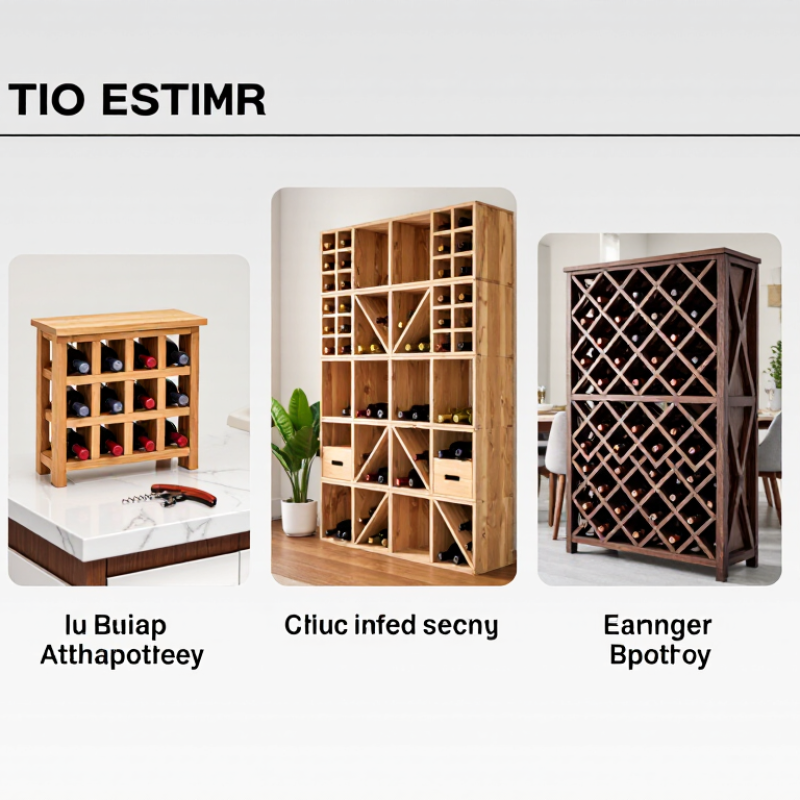
2026 Top Wooden Wine Rack Types for Global Buyers

Wooden Wine Rack Basics: Standard 750 mL Bottles and Key Design Types

Wooden wine racks are designed around the familiar 750 mL bottle, but that size does not guarantee a perfect fit. A standard Bordeaux bottle is relatively straight-sided; Burgundy bottles often have broader shoulders. Measure the bottle’s widest point and height before choosing a rack. Allow extra clearance for easy removal. Small gaps matter.

The International Organisation of Vine and Wine’s State of the World Vine and Wine Sector in 2023 estimated global wine consumption at 221 million hectolitres. That scale helps explain why buyers encounter varied bottle shapes across markets. Common wooden rack types include horizontal cubbies, modular stackable grids, countertop displays, and wall-mounted racks. Horizontal slots keep bottles stable, while modular units adapt as collections grow. Wall-mounted designs save floor space, but need secure fixing and suitable wall support.

For mixed bottle shapes, adjustable or open-front compartments can be more practical than tight, uniform cells. Check shelf depth, joinery, finish, and load capacity; damp cellars can stress wood and joints. A precise-looking grid may still catch a wide shoulder. Leave room to lift each bottle without scraping its neck.

Wall-Mounted and Countertop Racks: Space Needs and Bottle Capacity

Wall-mounted wooden wine racks suit narrow kitchens, dining rooms, and small tasting areas. Measure the wall before choosing a slot count. A typical 750 ml bottle is about 75 mm wide and 300 mm long, though bottle shapes vary. Allowing roughly 100 mm per slot gives six bottles about 600 mm of rack width, before end clearances. Check bottle length against shelf depth, too. The rack should hold bottles securely without labels scraping the wall. Use suitable fixings for the wall material, and leave room to lift bottles out. Measure twice.

Countertop racks are easier to move, but they compete with food-preparation space. A six-slot layout may occupy roughly 600 mm in width at 100 mm per bottle; confirm the actual product dimensions before buying. Keep the rack away from hot appliances and direct sunlight, since temperature swings and light can affect stored wine. The OIV’s State of the World Vine and Wine Sector in 2024 estimated global wine production at 225.8 million hectolitres, the lowest level in six decades. That figure describes production, not household storage demand, but it underlines why global buyers may need to accommodate varied bottle shapes. Capacity labels can be optimistic: test-fit your widest bottles before relying on every slot.

2026 Top Wooden Wine Rack Types for Global Buyers - Wall-Mounted and Countertop Racks: Space Needs and Bottle Capacity

Rack Type Typical Size (W × H × D) Typical Capacity Space Needs Placement and Installation Best Suited For Key Buying Consideration
Wall-Mounted Horizontal Rack 24–36 × 6–12 × 4–6 in
(61–91 × 15–30 × 10–15 cm)
4–12 bottles per unit Uses wall width; projects about 4–6 in (10–15 cm) from the wall. Mount to suitable wall framing or masonry using hardware appropriate to the wall. Small kitchens, dining areas, and display walls. Check the mounting method, loaded weight, and bottle spacing before installation.
Wall-Mounted Vertical Rack 6–12 × 24–48 × 4–6 in
(15–30 × 61–122 × 10–15 cm)
4–10 bottles per unit Requires a narrow wall area with sufficient vertical clearance. Wall-fixed; ensure bottles are securely supported and not in a high-traffic contact zone. Narrow rooms or unused vertical wall space. Confirm that the design holds bottles in the intended orientation and accommodates their shape.
Compact Countertop Rack 8–16 × 8–14 × 6–10 in
(20–41 × 20–36 × 15–25 cm)
2–6 bottles Needs a clear counter area roughly the size of a small kitchen appliance base. Freestanding; place on a level, stable surface away from the edge. Apartments, occasional use, or a small everyday selection. Measure the available counter depth and allow room to handle bottles.
Multi-Tier Countertop Rack 12–24 × 12–20 × 8–14 in
(30–61 × 30–51 × 20–36 cm)
6–18 bottles Uses more vertical height while keeping its footprint relatively compact. Freestanding; check the rack is stable when fully loaded. Buyers needing more capacity without a floor-standing cabinet. Compare overall height with overhead cabinets and verify access to each tier.
Expandable or Modular Countertop Rack 12–24 × 8–16 × 8–14 in per module
(30–61 × 20–41 × 20–36 cm)
6–12 bottles per module; capacity varies with configuration. Footprint grows as modules are added; leave room for expansion and access. Freestanding or stackable only as specified by the rack design. Collections expected to grow over time. Check module compatibility and whether stacking requires additional securing.

Size and capacity figures are typical planning ranges, not standardized product dimensions. Actual capacity depends on bottle shape and spacing; larger bottles, such as many sparkling-wine bottles, may reduce usable capacity. Measure the intended space and check product specifications before purchase.

Modular and Stackable Racks: Expanding Storage by Bottle Count

Modular and stackable wooden wine racks let buyers expand storage without replacing an entire system. A six-bottle section may fit beneath a counter, then connect with matching units as a collection grows. Check that modules have consistent dimensions and secure joints. Review the stated load limit, and place the rack on a level, dry floor. Uneven tile can make a tall stack wobble.

Bottle count is only part of the calculation. Standard bottles may fit familiar openings, while sparkling or wider bottles need more clearance. Measure the largest bottles you expect to store, with room for fingers to lift them. Leave space behind the rack for cleaning. In humid rooms, sealed wood and stable indoor conditions can help reduce swelling. Details matter. Buyers ordering internationally should confirm the assembled dimensions, not just the carton size.

Before buying, sketch the available floor or wall area and mark the planned height. Add one tier at a time, checking alignment and stability. Do not exceed the rack’s tested configuration, even if the pieces seem to lock together. Modular systems save space, but they can encourage optimistic capacity estimates. A layout may look tidy while making bottles awkward to reach. Plan around daily use, not just the total bottle count.

Freestanding and Cellar Racks: Organizing Wine at 55°F (13°C)

A steady temperature near 55°F (13°C) helps limit premature aging, but consistency matters more than chasing an exact number. Wooden racks organize bottles; they do not control temperature or humidity. Keep them away from sunny windows, heaters, and vibrating appliances. Small details matter.

Freestanding racks suit dining rooms, pantry corners, and small collections. Choose a level floor and a rack with a broad, stable base. Check that bottles slide in without scraping labels or knocking neighboring glass. A full rack can become heavy, so confirm the floor and rack can support its loaded weight. It is easy to underestimate this.

Cellar racks make better use of walls and longer storage areas. Leave space for air to circulate, and avoid pressing wood tightly against damp masonry. Bottles sealed with natural cork are commonly stored on their sides, keeping the cork in contact with wine. Still, rack design should match bottle shapes and planned access. Measure your largest bottles before buying; they may not fit standard slots. Temperature swings, dry air, or persistent dampness need attention beyond the rack itself. A basic thermometer and occasional inspection can reveal problems before labels wrinkle or wood warps.

2026 Top Wooden Wine Rack Types for Global Buyers — Freestanding and Cellar Racks: Organizing Wine at 55°F (13°C)

Freestanding wooden racks suit flexible storage, while cellar racks help organize larger collections. Racks organize bottles but do not regulate temperature; 55°F converts to approximately 12.8°C, commonly rounded to 13°C.

Wood, Finish, and Storage Conditions: Comparing 50–70% Relative Humidity

Wooden wine racks respond to the air around them. In rooms held near 50–70% relative humidity, wood is less likely to dry excessively or swell quickly, though readings can still fluctuate. Solid oak or pine feels substantial, but its boards may move with seasonal changes. Plywood or veneered racks can offer steadier panels when properly assembled. Check joints and shelf supports, not just appearance.

Finish matters, too. A sealed coating slows moisture exchange and wipes clean after a spill, while an oil finish leaves more of the wood’s texture visible. Neither makes a rack waterproof. Keep it away from damp walls, direct sunlight, and heating vents. Small details count.

For a cellar with stable humidity, a freestanding rack is easy to inspect and reposition. Modular units suit growing collections, but uneven floors can twist their frames. Wall-mounted designs save space; confirm the wall and fixings can carry the loaded rack safely. Use a hygrometer near the bottles, not beside a vent. I would not treat one reading as proof of stable conditions. Check it across several days, and look for condensation, musty odors, or loose joints. Real rooms are imperfect. A little seasonal movement is normal, but persistent dampness calls for better ventilation and distance from the wall.

FAQS

What temperature suits wine storage?

Aim for about 55°F (13°C), but steady conditions matter more than an exact reading. Small swings happen.

Do wooden racks control temperature or humidity?

No. They hold bottles, but a thermometer and hygrometer help you monitor the room.

Where should I place a freestanding rack?

Choose a level floor away from sunny windows, heaters, and vibrating appliances. Check its base and loaded weight.

What should I consider when choosing a cellar rack?

Leave room for airflow, and avoid pressing wood against damp masonry. Wall-mounted racks need secure fixings.

Should cork-sealed bottles lie on their sides?

They are commonly stored horizontally, keeping wine in contact with the cork. Check that each bottle fits without scraping its label.

What humidity range is suitable for wooden racks?

Around 50–70% relative humidity can help limit excessive drying or swelling. One reading is not enough; I still check over several days.

Which wood or finish should I choose?

Solid oak or pine feels sturdy, while well-assembled plywood can provide steady panels. Sealed finishes wipe clean, but none are waterproof.

How can I spot storage problems early?

Look for condensation, musty smells, wrinkled labels, warped wood, or loose joints. Check larger bottles before buying; standard slots may not fit.

Conclusion

This guide introduces the Wooden Wine Rack through the practical needs of storing standard 750 mL bottles and choosing a design that fits the available space. Wall-mounted racks can make use of vertical areas, while countertop options keep a smaller selection close at hand. Modular and stackable designs offer flexibility: storage can grow as the bottle count increases, without requiring a single large unit from the start.

For larger collections, freestanding and cellar racks help organize bottles, with storage conditions around 55°F (13°C) supporting a cool environment. The guide also compares wood choices and finishes, highlighting how the surrounding conditions matter as much as the rack itself. Maintaining relative humidity within roughly 50–70% can help protect corks and stored wine, while the right rack layout makes bottles easier to arrange and access.

Ethan

Ethan

Ethan is a dedicated marketing professional with a strong understanding of the company’s products, customers, and industry landscape. Through clear communication, thoughtful research, and a practical approach to market development, he helps present the company’s value in a way that is both......