

Expert knowledge on Acacia, Teak, and Rubberwood kitchenware manufacturing, sustainable sourcing, and export trends.
Learn how NaTree ensures full compliance with global food safety regulations and eco-friendly timber standards.
A Wooden Charcuterie Board can turn an ordinary service into a memorable customer experience. Its natural grain, warm texture, and practical surface create a stronger presentation than disposable trays. Guests notice the details. They see sliced prosciutto, aged cheddar, green grapes, and toasted almonds arranged against living wood.
Marissa Mullen, author of That Cheese Plate Will Change Your Life, says, “The key to a great board is balance.” That principle also matters for business owners. A well-designed Wooden Charcuterie Board can support a restaurant’s visual identity, improve table presentation, and encourage social sharing. It may also provide long-term value when selected from durable, responsibly sourced wood.
Appearance is only part of the decision. Boards must be easy to clean, properly maintained, and suitable for the foods served. Some businesses underestimate moisture, staining, or repeated handling. That mistake can become expensive. A board needs care.
Choose a suitable finish. Follow the supplier’s cleaning instructions. Avoid treating every wooden surface as identical. Maple, acacia, walnut, and bamboo each offer different textures, weights, and maintenance needs. Acacia often provides attractive color variation, while maple offers a lighter, cleaner appearance.
The business case is promising, but it is not automatic. A beautiful board cannot repair weak service or poor food quality. Still, when presentation, hygiene, durability, and branding work together, a Wooden Charcuterie Board becomes more than tableware. It becomes a quiet marketing tool, a tactile part of the guest experience, and a practical investment worth evaluating carefully.
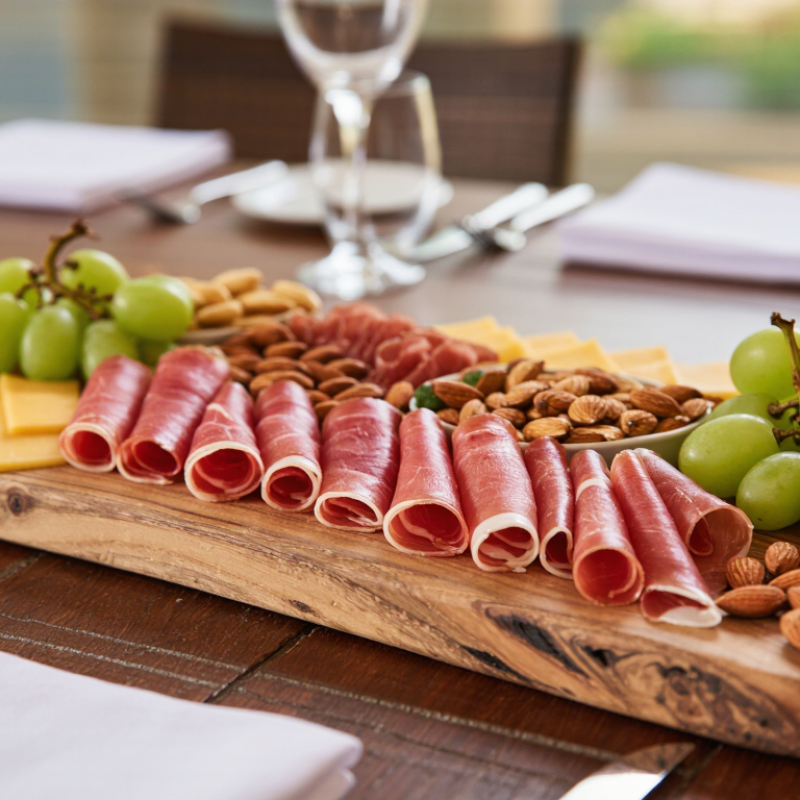
Wooden charcuterie boards give businesses a practical way to present food with warmth and character. In restaurants, they can hold sliced meats, cheeses, fruit, bread, and small portions for sharing. Their natural grain makes a table setting feel less formal, while the solid surface supports frequent service when properly maintained.
Caterers can use different board sizes for tasting menus, office events, and private gatherings. A smaller board works well for individual servings. Larger boards create a central display that encourages guests to explore. Hotels may place them in rooms with breakfast items or local snacks. Retailers can also use boards in product photography, gift packages, and seasonal displays.
They are not maintenance-free. Food businesses should clean each board after use, dry it immediately, and follow local food-safety procedures. Deep scratches may trap residue and need professional assessment. Oil treatment can reduce drying, but too much oil may leave a sticky surface. I have seen attractive boards become awkward during service because handles were difficult to grip. Design details matter.
A board should match the business routine. Frequent washing, storage space, portion size, and staff training all affect its usefulness. A beautiful board is helpful only when employees can handle it safely and consistently.
A wooden charcuterie board gives food presentation a warmer, more inviting character. Its natural grain creates contrast beneath pale cheeses, red grapes, cured meats, and green herbs. Guests often notice this texture before tasting anything. That first impression can make a small serving feel carefully prepared.
Wood is also practical for business settings. It is lighter than stone and less visually harsh than metal. A sturdy board can move from a preparation area to a dining table with less effort. In catering work, that flexibility helps staff present food efficiently. However, wood is not maintenance-free. It can absorb moisture, develop stains, or show knife marks over time. I would not hide those changes. They reflect use, although poor cleaning habits can create genuine hygiene concerns. Choose food-safe materials, follow local food-safety guidance, and inspect boards regularly for cracks or deep grooves.
Tips: Match the board size to the portion. Leave open space around each food group. Wipe spills quickly, then clean and dry the board thoroughly. Use separate boards when handling foods with different preparation needs. Apply suitable board oil when the surface looks dry, but avoid products that are not intended for food contact. A darker grain can frame light foods beautifully. Still, overly busy patterns may compete with delicate ingredients. Test the layout under real dining-room lighting, because presentation can look different in photographs and in person.
Harder wood species generally provide better resistance to knife marks and surface wear, helping maintain an attractive presentation over repeated use. The values below show approximate Janka hardness ratings, measured in pounds-force (lbf). Higher values indicate greater resistance to indentation.
Source: Representative Janka hardness values reported for standard wood species; actual hardness can vary by growing conditions, moisture content, and test sample.
A wooden charcuterie board can make a business’s food presentation feel warmer and more memorable. The wood choice affects appearance, weight, durability, and maintenance. Hard maple offers a pale, clean look and resists everyday knife marks. Walnut creates deeper contrast with cheese, grapes, and cured meats. Acacia often provides varied grain patterns, but each piece can look different. That natural variation is attractive, though it may complicate consistent product photography.
Size should match your serving style. A compact board suits individual portions, tasting rooms, and small tables. Larger boards work better for group orders, but they need stronger packaging and more storage space. Measure your display areas before ordering. A board that looks impressive online may feel awkward on a crowded counter. I once preferred oversized boards, but staff found them difficult to carry when fully loaded.
Design details also influence daily use. Rounded edges improve handling, while stable feet help prevent movement during service. A shallow groove can hold juices from fruits, although it may trap crumbs and require extra cleaning. Choose a smooth, food-contact finish that follows reliable care guidance. Wash wooden boards promptly, dry them upright, and inspect them regularly for cracks or rough spots. Small details matter. Even attractive boards need practical care, and that part is easy to underestimate.
Why Choose a Wooden Charcuterie Board for Your Business?
A wooden charcuterie board can create a warm, handcrafted presentation for customers. Its safety depends more on daily care than appearance. Choose a dense, close-grained hardwood with a smooth, food-safe finish. Avoid boards with deep cracks, loose joints, or rough edges. These defects can trap cheese residue, moisture, and bacteria. Inspect the surface before each service period. Small grooves matter.
Wash the board by hand with warm water and mild dish soap after use. Do not leave it submerged. Keep it dry. Dry both sides with a clean towel, then store it upright with airflow around the board. A dishwasher may cause warping or splitting unless the manufacturer clearly permits it. For businesses, use separate boards for ready-to-eat foods and raw ingredients. Color coding can reduce handling mistakes during busy service.
Apply food-grade mineral oil when the wood looks pale or feels dry. This helps reduce moisture absorption, but it does not disinfect the surface. Follow your local food-safety guidance for approved sanitizing methods and contact times. Never rely on a pleasant smell or clean appearance. That is an easy mistake. Deep cuts and persistent odors may require professional assessment or replacement. Wooden boards are durable, not maintenance-free. A rushed closing routine can undo careful preparation from the entire day.
A wooden charcuterie board can turn a shared table into a visible brand experience. Its grain, edge profile, and finish create tactile cues before guests taste anything. The board speaks. A 2018 global consumer survey, The Future of Customer Experience and Personalization, found that 73% of consumers consider experience an important purchasing factor. Another finding was less forgiving: 32% would stop using a business after one poor experience.
That risk makes presentation details operational, not decorative. Use a consistent board size, logo-free engraving, and a defined placement pattern for meats, fruit, crackers, and condiments. A server can recreate the same visual language across tables. Warm wood also photographs naturally under restaurant lighting, supporting user-generated content without demanding aggressive promotion. In practical service testing, however, heavy boards can slow table clearing. That weakness needs planning.
A 2020 global sustainability study reported that 57% of consumers were willing to change purchasing habits to reduce environmental impact. Responsibly sourced wood, clear care instructions, and durable construction can support that expectation. Avoid vague claims. State the wood species, finish suitability, and cleaning method. Food-safety guidance recommends washing serving surfaces with hot, soapy water and drying them thoroughly. Never present decorative boards as automatically hygienic. Moisture stains, knife marks, and uneven sealing can damage trust quickly. Small details matter.
| Business Dimension | Typical Wooden Board Data | Customer Experience Benefit | Branding Application |
|---|---|---|---|
| Material durability | Hardwood species commonly used for serving boards typically have a Janka hardness of approximately 1,000–1,500 lbf, depending on the species and grade. | A solid, stable serving surface can create a more premium impression and withstand regular presentation use when properly maintained. | Supports a quality-focused visual identity and can be selected to match a restaurant, hotel, catering, or retail environment. |
| Common commercial sizes | Frequently used formats include approximately 30 × 20 cm, 35 × 25 cm, and 45 × 30 cm. Actual sizes vary by menu and serving format. | Different sizes allow businesses to serve individual portions, sharing platters, tasting selections, and takeaway gift sets. | A consistent size system helps create a recognizable presentation style across menus, events, and product photography. |
| Personalization area | A logo, message, or design is commonly placed in a corner, on a handle, or on the underside to preserve the food-contact surface. | Subtle personalization can make the serving item feel more distinctive without overwhelming the food presentation. | Laser engraving, routing, or a custom shape can reinforce visual consistency at tables, events, and customer homes. |
| Food-contact finish | Food-contact boards are commonly finished with food-safe mineral oil or a suitable board wax. Finishes should comply with applicable local food-contact requirements. | A smooth, well-maintained surface improves the tactile experience and helps the board look clean and presentable. | A consistent finish communicates attention to detail and supports a refined presentation standard. |
| Maintenance requirements | Recommended care generally includes hand-washing with mild soapy water, prompt drying, and periodic re-oiling. Wooden boards should not normally be placed in a dishwasher. | Clear care instructions help customers preserve the board’s appearance and reduce avoidable damage. | Printed or digital care guidance extends the branded interaction beyond the original purchase or dining occasion. |
| Presentation flexibility | Wooden boards can accommodate cheeses, cured meats, fruit, bread, desserts, appetizers, and tasting portions without changing the serving platform. | A varied layout encourages visual contrast through color, texture, and portion arrangement. | The same board design can be used across dine-in service, catering, photography, gifting, and promotional displays. |
| Material story | Wood grain, knots, and natural color variation are inherent characteristics; no two boards are visually identical. | Natural variation can make each serving experience feel more personal and less mass-produced. | Sustainability or sourcing claims should be supported by verifiable supplier documentation and relevant certification where applicable. |
| Replacement and lifecycle planning | Service life depends on wood species, thickness, washing practices, drying, frequency of use, and maintenance; there is no universal service-life figure. | Consistent inspection and replacement standards help maintain hygiene, safety, and presentation quality. | A documented care and replacement program protects the consistency of the customer-facing experience. |
| Planning note: Specifications are typical industry ranges and practical operating guidelines, not guarantees. Final material selection, finish, dimensions, cleaning procedures, and food-contact compliance should be confirmed with the manufacturer and applicable local regulations. | |||
Restaurants can serve sliced meats, cheeses, fruit, bread, and small shared portions on them. Their natural grain creates a warmer table setting. A solid surface supports frequent service when maintained properly.
Small boards fit individual servings or compact tasting menus. Larger boards create central displays for office events and private gatherings. Match the board to portion size and available table space.
Wood feels warmer than metal and lighter than stone. Its grain contrasts with pale cheese, red grapes, green herbs, and dark meats. Guests may notice the texture before tasting the food.
Hotels can place them in rooms with breakfast items or local snacks. Retailers can use them in product photography, gift packages, and seasonal displays. The same board may serve several purposes.
Clean each board after use, then dry it immediately and thoroughly. Wipe spills quickly. Follow local food-safety procedures and inspect boards regularly.
Wood may absorb moisture, develop stains, or show knife marks. Deep scratches and grooves can trap residue. These surfaces need professional assessment or replacement decisions.
Apply suitable food-contact board oil when the wood looks dry. Avoid excessive oil, because it may create a sticky surface. Never use products unsuitable for food contact.
Handles must provide a secure grip during busy service. Leave open space around each food group. Test the layout under real dining-room lighting, not only in photographs.
Consider washing frequency, storage space, portion sizes, and staff training. A beautiful board may still slow service. This is easy to overlook.
Separate boards can help manage foods with different preparation needs. Staff should handle them consistently and safely. Good appearance cannot replace hygiene.
A Wooden Charcuterie Board is a practical and attractive choice for businesses such as restaurants, cafés, caterers, hotels, and event venues. It can be used to serve cheeses, cured meats, fruit, desserts, appetizers, and shared tasting selections. Wood adds natural warmth, texture, and visual appeal to food presentation, helping create a more inviting dining experience. Different wood types, sizes, shapes, and designs allow businesses to select boards that match their menu, serving style, available space, and overall atmosphere.
Choosing the right board also involves careful attention to hygiene and food safety. Businesses should select durable, food-safe materials, keep separate boards for different food categories when appropriate, and follow consistent cleaning, drying, and maintenance routines. Regular conditioning can help preserve the wood and extend its usable life. In addition to serving food, a well-designed Wooden Charcuterie Board can support branding and customer experience through customized shapes, engraved details, or coordinated presentation. Its reusable nature and handcrafted appearance can make meals feel more memorable while reinforcing a business’s attention to quality and hospitality.