
Direct factory supply of FSC-certified Acacia, Olive, Teak, and Rubberwood serving platters engineered for high-volume hospitality, wholesale importers, and private label brands.
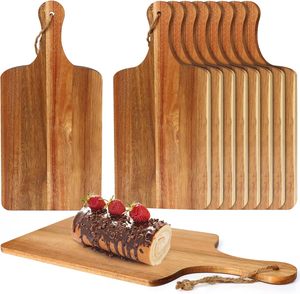
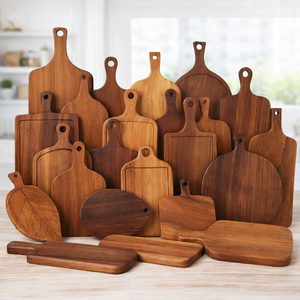
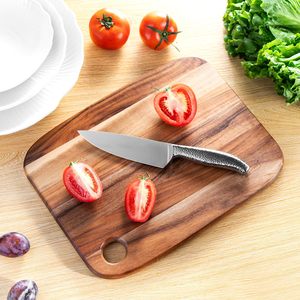
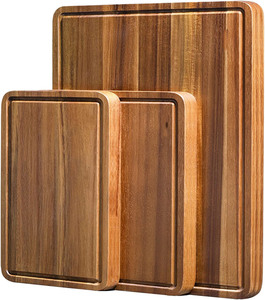
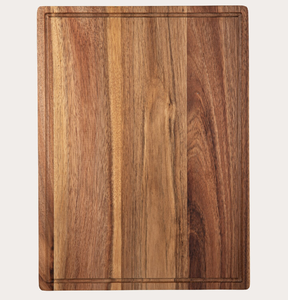
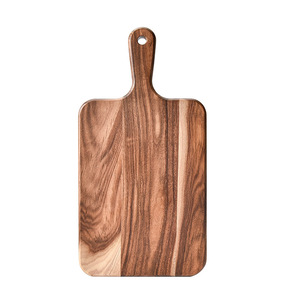
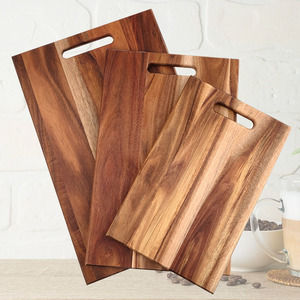
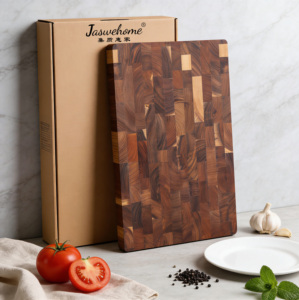
The global demand for authentic, eco-friendly, and food-safe wooden table presentation pieces has grown exponentially over the past decade. Commercial procurement managers, hospitality supply chain leaders, and retail brand owners searching for high-volume CE Certified Rustic Wooden Charcuterie Board Suppliers & Exporters face an evolving matrix of international compliance requirements, material choices, and quality assurance benchmarks. As consumer preference shifts away from synthetic plastics and chemically bonded composite woods, natural solid hardwoods—specifically Acacia, Teak, and Rubberwood harvested from sustainable plantations in Thailand—have taken center stage.
A charcuterie board is no longer merely a utilitarian cutting surface; it is a premium culinary presentation tool. Ensuring structural integrity, moisture stability, zero chemical leaching, and long-term durability in commercial dishwasher-adjacent restaurant environments requires deep manufacturing expertise. This whitepaper details the engineering standards, wood species selection matrix, regulatory compliance requirements (including EUDR and CE conformity), and strategic procurement insights necessary for professional buyers to optimize their supply chains.
Information Gain Key Takeaway: CE Marking on wooden kitchenware verifies compliance with European Regulation (EC) No 1935/2004 for food-contact materials, ensuring heavy metals, toxic finishes, or volatile formaldehyde resins never compromise food safety.
Choosing the correct raw material directly influences product longevity, aesthetic appeal, knife resistance, and retail price positioning. Below is a comparative technical specification analysis compiled by NaTree's wood engineering laboratory:
| Wood Species | Janka Hardness (lbf) | Natural Water Resistance | Antibacterial Density | Commercial Suitability | Supply Chain Sustainability |
|---|---|---|---|---|---|
| Thai Acacia Wood | 1,750 lbf (High) | Excellent | High (Tight Pore) | Charcuterie Platters, Heavy Chopping | FSC Plantation Grown (Thailand) |
| Golden Teak (Tectona grandis) | 1,070 lbf (Medium-High) | Superior (Natural Oils) | Very High | Luxury Gourmet Platters, Bowls | FSC Certified Replantation |
| Mediterranean Olive Wood | 1,520 lbf (High) | Moderate | Moderate | Artisanal Rustic Specialty Boards | Wild Harvested / Restricted Supply |
| Rubberwood (Hevea brasiliensis) | 960 lbf (Medium) | Moderate (Treat Required) | Standard | Budget Retail, Domestic Kitchenware | Upcycled Post-Latex Timber |
Acacia wood stands out as the optimal material for large-scale B2B commercial charcuterie board procurement. With a Janka hardness rating of approximately 1,750 lbf, Acacia exceeds White Oak (1,360 lbf) and Maple (1,450 lbf) in warp resistance and shear strength. Its variable grain patterns, rich contrasting sapwood/heartwood tones, and natural resistance to liquid absorption make it visually stunning and mechanically robust.
The manufacturing process at NaTree (K.T. Thai Local Products Co., Ltd.) combines traditional hand craftsmanship with modern computerized processing to eliminate common wood defects such as warping, cupping, checking, and joint separation.
Raw timber is seasoned in automated computer-controlled dehumidification kilns until internal Moisture Content (MC) reaches 8%–12%. This exact MC range prevents cracking in low-humidity export destinations like Northern Europe and North America.
Multi-plank edge-grain and end-grain boards utilize formaldehyde-free, D4-rated waterproof polyurethane glues that comply strictly with FDA 21 CFR 175.105 and European LFGB standards for non-toxic food contact.
Every charcuterie board passes through multi-stage sanding up to 320-grit smoothness before deep saturation in 100% pure food-grade pharmaceutical mineral oil blended with natural beeswax for permanent water repellency.
Importing wooden serveware into regulated markets requires strict adherence to international legal frameworks. Importers must verify that their supplier provides verified documentation for:
As consumer dining dynamics shift toward shared dining experiences, grazing tables, and artisanal food plating, the global charcuterie board market is evolving rapidly. Key trends shaping future bulk procurement strategies include:
Modern hospitality venues require versatile boards that function seamlessly across back-of-house food prep and front-of-house presentation. Expect growing demand for double-sided reversible boards featuring deep juice grooves on one side for meat carving and smooth sanded surfaces on the reverse side for artisan cheese and fruit display.
Retail chains and corporate gift buyers are increasingly opting for high-precision CNC custom shapes, laser-etched brand logos, recessed dipping-bowl cutouts, and integrated stainless steel handle hardware. Direct-to-factory OEM partnerships allow buyers to develop proprietary product lines without intermediary markup costs.
Commercial kitchens are prioritizing End-Grain Acacia chopping blocks. Unlike traditional Edge-Grain construction, End-Grain wood fibers absorb knife blade impacts by spreading apart and naturally springing back, maintaining a pristine aesthetic surface and extending blade sharpness dramatically.
With over three decades of operational excellence based in Chachoengsao, Thailand, NaTree (K.T. Thai Local Products Co., Ltd.) has established itself as a premier FSC-certified manufacturer and global exporter of high-grade wooden kitchenware, serveware, tableware, and furniture.
Our expansive manufacturing facility spans thousands of square meters equipped with automated CNC routers, high-capacity kiln dryers, and dedicated hand-finishing assembly lines capable of fulfilling high-volume container orders reliably.
We handle all export documentation, phytosanitary certifications, fumigation compliance (ISPM 15 standard), and bill of lading procedures to ensure smooth customs clearance in Europe, North America, Japan, and Australia.
NaTree operates under rigorous ISO quality control frameworks. Our facilities undergo regular ethical, social, and environmental third-party audits, making us a fully qualified vendor for international retail conglomerates.
Our products comply fully with CE Marking standards, Regulation (EC) No 1935/2004, US FDA 21 CFR 175.300, and German LFGB food-contact safety standards. Furthermore, our raw timber is 100% FSC-certified for sustainable forestry compliance.
All timber is kiln-dried to an exact moisture content (MC) of 8%–12% before crafting. We wrap products in moisture-barrier shrink film with silica desiccants inside export-grade double-corrugated cartons to protect against relative humidity fluctuations during transit.
Yes. As a direct manufacturer, NaTree provides full OEM and ODM services. We execute custom CNC shaping, precision laser engraving, hot-stamping, and custom barcode packaging based on your technical CAD drawings or sample physical prototypes.
Standard Minimum Order Quantities generally start at 300 to 500 units per design depending on size complexity. Production lead times typically range from 30 to 45 days after deposit confirmation and pre-production sample sign-off.
Thai Acacia and Teak possess natural antibacterial oils, lower porosity, and higher Janka hardness ratings than Soft Maple or Rubberwood. Unlike laminated bamboo which relies heavily on synthetic adhesives, solid tropical hardwood boards offer superior knife resilience and richer aesthetic grain variation.
Absolutely. NaTree maintains fully documented Chain-of-Custody tracking. We provide EU importers with full geolocation data mapping for our timber plantations to satisfy all EUDR requirements prior to customs arrival.
Direct Factory Wholesale | OEM/ODM Private Labeling | Verified CE & Food-Safe Compliance