1. Executive Overview: The Evolution of China & Asian Handcrafted Wooden Wall Art Exports
In the contemporary landscape of global commercial interior design, hospitality architecture, and luxury residential decor, handcrafted wooden wall art has shifted from a niche craft category to a multi-billion dollar international trade sector. B2B buyers—ranging from high-end furniture importers and retail chains to architectural procurement agencies—increasingly seek suppliers in Asia capable of combining traditional woodcarving mastery with rigorous industrial-scale compliance.
As major global procurement hubs adapt to shifting trade dynamics, manufacturing ecosystems across China and specialized Southeast Asian centers (such as Thailand and Vietnam) have achieved unprecedented technological synergy. Top-tier manufacturers no longer rely solely on manual carving; instead, they integrate multi-axis CNC relief milling, digital moisture tracking kilns, automated edge-gluing presses, and non-toxic UV finishing lines. This technological evolution guarantees that large-scale orders of solid hardwood wall sculptures retain the organic beauty of authentic timber while meeting strict dimensional tolerance and environmental metrics required by Western markets.
This whitepaper provides procurement directors, brand owners, and supply chain executives with a technical benchmark for evaluating, auditing, and selecting premier manufacturing partners for handcrafted wooden wall art, architectural wooden panels, and dual-purpose decorative hardwood assets.
2. Material Engineering & Wood Species Selection Guide
Selecting the optimal wood species is the primary determinant of a product's structural longevity, aesthetic depth, and resistance to environmental stress. The table below outlines the mechanical properties and compliance parameters of the primary commercial timber species utilized by leading exporters:
| Wood Species |
Janka Hardness (lbf) |
Avg. Density (kg/m³) |
Equilibrium Moisture Target |
Grain Character & Aesthetics |
EUDR / Lacey Act Risk Profile |
| Acacia (Acacia mangium / auriculiformis) |
1,750 lbf |
650 – 750 kg/m³ |
8% – 10% (Kiln Dried) |
Deep golden-brown swirls, vibrant sapwood contrast, rich figure |
Very Low (FSC Plantation Sourced) |
| Teak (Tectona grandis) |
1,070 lbf |
650 – 700 kg/m³ |
9% – 11% (Kiln Dried) |
Golden honey tone, straight tight grain, rich natural teak oil |
Low to Medium (Requires CoC Verification) |
| Rubberwood (Hevea brasiliensis) |
960 lbf |
590 – 640 kg/m³ |
8% – 10% (Kiln Dried) |
Uniform light straw color, minimal grain pattern, highly stainable |
Very Low (Upcycled Agricultural Byproduct) |
| Black Walnut (Juglans nigra) |
1,010 lbf |
610 – 660 kg/m³ |
7% – 9% (Kiln Dried) |
Rich chocolate dark hues, complex wave patterns, luxury appeal |
Low (North American Export Sourced) |
| Olive Wood (Olea europaea) |
2,700 lbf |
850 – 990 kg/m³ |
8% – 10% (Air + Kiln Dried) |
Dramatic wild figure, marbled dark streaks, high natural density |
Medium (Requires strict kiln certification) |
Technical Key Takeaway for Buyers:
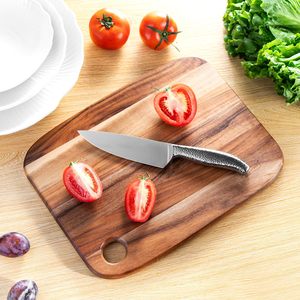
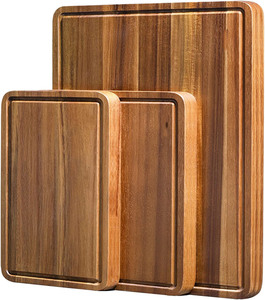
For large-format handcrafted wall panels, Acacia wood represents the gold standard for price-to-performance ratio. Its high Janka hardness rating (1,750 lbf) prevents surface denting during shipping and installation, while its interlocking grain structure significantly reduces the risk of longitudinal checking or warp compared to softer woods.
3. Product Development & Design Trends (2025–2030)
Market intelligence indicates a dramatic shift in consumer and contract interior preferences. B2B buyers must align their product development roadmaps with the following four macro trends driving global demand:
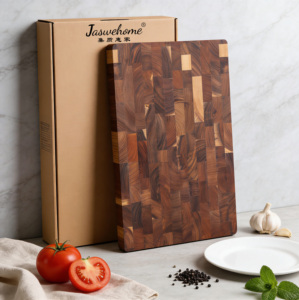
Modern commercial spaces demand multi-functional decor. End-grain wood mosaic wall art pieces (such as Product 8) serve dual purposes: acting as visually commanding sculptural centerpieces while functioning as natural acoustic diffusers that break sound reflections in open-plan offices, luxury dining venues, and hotel lobbies.
Biophilic architecture prioritizes direct connections to nature. Triptych wall installations featuring live-edge profiles, organic sapwood lines, and raw natural oil finishes allow architects to introduce elemental warmth into minimalist concrete and glass environments.
High-margin retail products increasingly combine hand-carved hardwood with complementary materials. Food-grade clear/black epoxy resin infills, liquid brass accent lines, and brushed copper frame joinery are dominating high-end retail catalogs across Europe and North America.
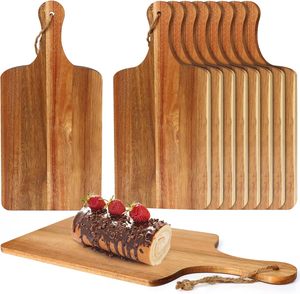
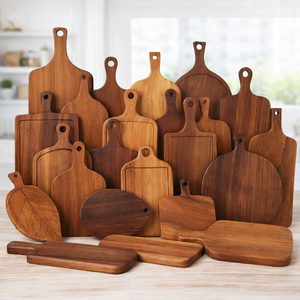
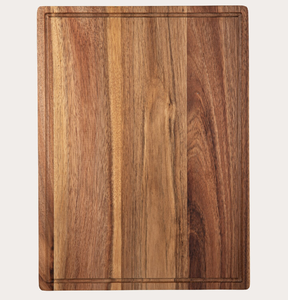
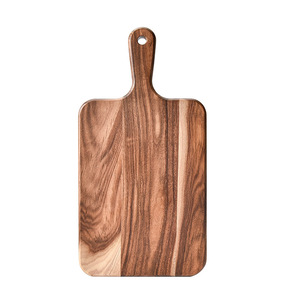
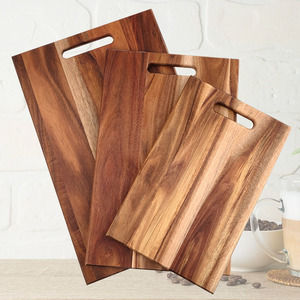
Urban consumers prefer space-efficient, multi-use homewares. Large-format artisan boards with pre-drilled hanging eyelets serve as decorative wall plaques when not in use and double as luxury charcuterie serving boards during entertaining, maximizing retail sell-through rates.
4. Future B2B Procurement & Supply Chain Compliance Trends
Global supply chain compliance is undergoing its most stringent regulatory overhaul in decades. Importers must navigate new legislative frameworks to prevent severe customs delays, border rejections, or legal liabilities.
A. Mandatory EUDR (EU Deforestation Regulation) Alignment
Beginning in 2025, the European Union mandates full traceability for all timber products imported into the EU market under the EUDR. Importers must guarantee that wood has not been sourced from recently deforested land. Top Asian exporters have responded by implementing geolocation polygon tracking for plantation lots, maintaining an audited Chain-of-Custody (CoC) from farm to finished artwork.
B. Moisture Content Optimization & Climate Shock Mitigation
The primary technical reason for customer returns of solid wood wall art in destination markets (e.g., North America, Northern Europe) is cracking or warping caused by ambient humidity drop during winter heating seasons. Advanced exporters utilize a 3-stage moisture control protocol:
- Stage 1: Pre-Air Drying: Raw timber planks are air-stacked for 30 to 60 days under controlled shade to release initial free moisture.
- Stage 2: Computerized Steam Kiln Drying: Timber undergoes automated thermal treatment for 14-21 days to drop bound moisture to 8%-10%, setting the wood's memory.
- Stage 3: Equalization & Conditioning: Dried lumber rests in climate-controlled rooms for 7 days before CNC machining to relieve internal growth stresses.
C. Automated Prototyping & OEM Private Labeling
To reduce time-to-market, leading exporters now offer digital CAD/CAM 3D modeling within 48 hours of receiving a client sketch. Laser-engraving machines and custom hot-stamping presses allow seamless integration of private retailer logos, barcoding, and FSC-certified retail packaging directly on the production line.
Enterprise Capability Spotlight
Why Global Importers Partner With Certified Asian Exporters
Leveraging over 30 years of specialized manufacturing experience (built upon the operational foundation of leading Thai and Asian wood production hubs like NaTree / K.T. Thai Local Products Co., Ltd.), top export facilities provide an uncompromised competitive edge:
100% FSC Chain-of-Custody
Full legal compliance with EUDR, US Lacey Act, and Australian Illegal Logging Prohibition Act.
Food-Grade & Non-Toxic Finishes
Finished exclusively with natural plant oils, food-grade mineral wax, or zero-VOC waterborne seals.
Industrial Scale & Agility
State-of-the-art facilities handling high-volume FCL orders alongside customized low-MOQ runs.