
Explore our premium factory-manufactured extra large cutting boards crafted from sustainable Acacia, Teak, Black Walnut, and Rubberwood for global wholesale buyers.
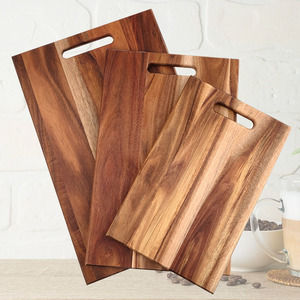
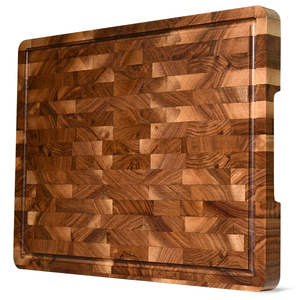
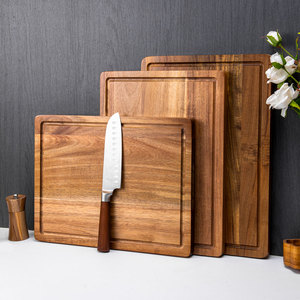
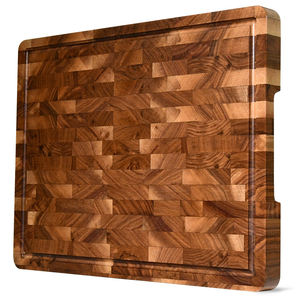
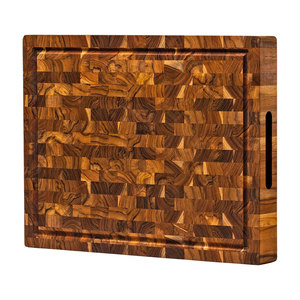
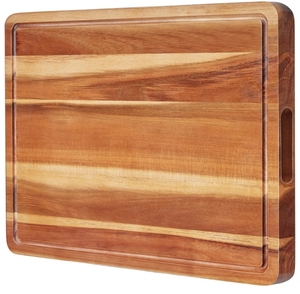
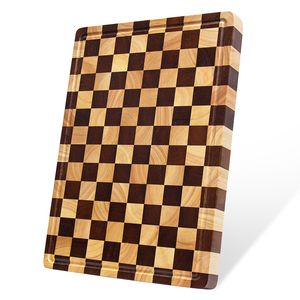
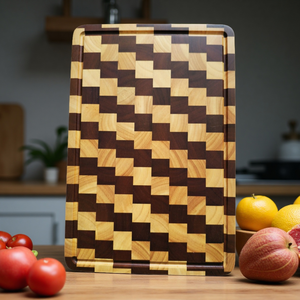
In the global culinary hardware and commercial kitchen equipment sectors, sourcing Extra Large (XL) and Extra-Extra Large (XXL) wood cutting boards presents complex manufacturing and procurement challenges. Unlike standard residential chopping boards (which typically range between 10x14 inches to 12x18 inches), commercial-grade and luxury retail XL cutting boards measure anywhere from 18x24 inches up to 24x36 inches, with thicknesses ranging from 1.5 inches to 3.5 inches. At these expansive dimensions, physical wood behavior—specifically internal stress accumulation, hygroscopic expansion, and moisture gradient differential—demands rigorous material engineering and precise manufacturing controls.
As a leading Thailand-based FSC-certified manufacturer (NaTree / K.T. Thai Local Products Co., Ltd.) with over 30 years of B2B export history, our industrial facilities in Chachoengsao specialize in contract manufacturing (OEM) and custom product development (ODM) for tier-one global importers, kitchenware brands, and hospitality distributors across North America, Europe, East Asia, and Australia.
Key Information Gain Insight: Manufacturing dimensional stability in extra-large wooden chopping blocks requires controlling equilibrium moisture content (EMC) within a strict 8%–12% window prior to lamination, combined with cross-grain stress-relief machining and FDA 21 CFR 175.105 cross-linking polyurethane or PVAc adhesives.
This technical whitepaper outlines the structural parameters, timber selection matrices, structural assembly methodologies (End-Grain vs. Edge-Grain), regulatory compliance frameworks (including EUDR 2025 deforestation compliance and FDA food contact safety), and future procurement trajectories for wholesale importers evaluating factory partners.
Selecting the optimal hardwood species for extra large cutting boards requires balancing Janka Hardness, natural oil content, grain structure porosity, and knife-blade preservation. Below is an engineering comparison of the primary hardwood species utilized in our OEM/ODM production lines:
| Wood Species | Janka Hardness (lbf) | Volumetric Shrinkage Coefficient | Natural Oleoresin Content | Knife Preservation Rating | Best B2B Application |
|---|---|---|---|---|---|
| Thai Acacia (*Acacia mangium*) | 1,750 lbf | Moderate (3.8%) | High (Natural Tannins) | High (Self-Healing) | Heavy-Duty Commercial Prep & Charcuterie |
| Plantation Teak (*Tectona grandis*) | 1,070 lbf | Extremely Low (2.2%) | Very High (Silica & Tectonoquinones) | Superior (Gentle on Steel) | Luxury Retail & Premium Kitchenware |
| Rubberwood (*Hevea brasiliensis*) | 960 lbf | Low-Moderate (3.1%) | Low (Kiln-Treated Latex Removal) | Moderate-High | High-Volume Value Retail & HORECA |
| American Black Walnut (*Juglans nigra*) | 1,010 lbf | Low (4.7%) | Moderate (Rich Natural Oils) | Superior (Executive Aesthetic) | High-End Gourmet Brands & Giftware |
For extra large cutting boards, Acacia wood and Teak wood offer unparalleled performance benefits due to their interlocking grain structures. Interlocking grain naturally resists splintering under severe cleaver impacts and minimizes longitudinal shearing when exposed to wash cycles and variable kitchen humidity levels.
Understanding the mechanical stress distribution, maintenance longevity, and structural failure modes of XL cutting board architectures.
Constructed by orienting vertical wood fibers upward. Chef knives slide between wood fibers rather than severing them, yielding a "self-healing" surface that preserves blade sharpness. Requires checkerboard block lamination with strict 2.5" to 3.5" thickness tolerances to prevent bowing.
Assembled using parallel hardwood staves running the full length of the board. Offers high flexural strength (Modulus of Rupture) and sleek linear aesthetics. Highly efficient for OEM manufacturing, enabling ultra-wide XL boards (e.g., 20x30 inches) at competitive price points.
We utilize exclusively food-grade, moisture-resistant D4/Titebond III FDA-approved adhesives. Internal expansion stress is mitigated by opposing ring-growth orientation during stave arrangement, preventing planar warping and seam delamination over long-term commercial use.
Global procurement metrics indicate a decisive shift in how international buyers, hotel groups, and retail chains source heavy-duty cutting boards. Key macro developments shaping the next 5 years of supply chain strategy include:
Enforcement of the EU Deforestation Regulation (EUDR) mandates full geolocation mapping and chain-of-custody tracking down to the forest plot. Manufacturers lacking FSC CoC certificates and transparent timber tracing will be barred from European markets. NaTree’s Thai supply chain provides 100% compliant plantation timber documentation.
Rising consumer awareness regarding microplastic shedding from synthetic polypropylene boards is driving rapid demand for organic hardwood alternatives. Large commercial prep stations are replacing plastic surfaces with extra-large end-grain blocks treated with mineral oil and beeswax.
OEM buyers are requesting integrated functionality: continuous perimeter juice channels with extra-deep liquid catchment wells (up to 200ml capacity), non-slip silicone foot mounts, recessed stainless steel carrying handles, and modular built-in stainless steel GN trays sliding underneath.
Operating out of our 188/1 M.1 Bangna-Trad Rd. KM. 42 Bangwua, Bangpakong facility in Chachoengsao, Thailand, K.T. Thai Local Products Co., Ltd. (NaTree) stands as a world-class manufacturing authority for wooden kitchenware and tableware. Our strategic factory advantages include:
Three decades of continuous operational refinement in tropical timber processing, computer-controlled kiln drying (8-12% moisture target), and high-precision CNC routing for consistent dimensional tolerances (±0.5mm).
All products undergo multi-stage automated and manual inspections. Finished boards receive deep immersion seasoning in USP grade food-safe mineral oil and organic carnauba/beeswax sealants, conforming to FDA and LFGB standard requirements.
Positioned near Thailand’s premier deep-sea port (Laem Chabang Port), we provide frictionless FOB, CIF, or DDP logistics management, complete with phytosanitary certificates, Certificate of Origin (Form E/Form D), and ISTA 1A drop-test export packaging.
Technical guidance and commercial parameters for importers, brand owners, and wholesale buyers looking to place OEM/ODM orders.
Our baseline MOQ for custom OEM extra-large wooden cutting boards (e.g., 18x24 inches or larger) typically starts at 300 to 500 units per size/design, depending on wood species and customization complexity. For standard catalog items or trial orders, flexible MOQ terms can be arranged.
We implement a strict 4-step humidity control protocol: 1) Computer-monitored Dehumidification Kiln Drying to achieve an 8%-12% Equilibrium Moisture Content; 2) Alternating annual ring grain orientation during stave assembly to cancel out lateral expansion vectors; 3) Application of high-tensile waterproof FDA Titebond III glues; 4) Thermal mineral oil vacuum immersion for deep fiber saturation.
Yes. We offer high-precision CO2 laser engraving, CNC inlay branding, custom hot-stamping, and custom color gift box packaging. We also support barcode labeling, master carton ISTA drop testing, shrink-wrapping with moisture absorbers, and POS retail displays.
Absolutely. All timber species, glue formulations, and mineral oil finishes comply with U.S. FDA 21 CFR 175.105 standards, European Regulation (EC) No 1935/2004, and German LFGB food-contact requirements. Test reports from accredited third-party laboratories (SGS, TUV, Intertek) are available upon request.
Custom OEM prototype samples are engineered and dispatched within 7 to 12 working days following 3D CAD/drawing approval. Full mass production lead times generally range between 30 to 45 days after deposit receipt and final sample confirmation.
Sourcing directly from Thailand allows North American and European buyers to mitigate heavy Section 301 anti-dumping tariffs often applied to alternative Asian manufacturing regions. Thailand maintains favorable trade treaties, transparent phytosanitary certification, and full compliance with international Lacey Act standards.
Extra-large wooden boards should always be hand-washed with mild soap and warm water, never submerged or cleaned in dishwashers. Regular conditioning with food-grade mineral oil or organic beeswax every 3 to 4 weeks restores hydrophobic protection and prevents surface drying or micro-fissure formation.