
High-precision manufactured cutting boards, chopping blocks, and charcuterie boards designed for commercial kitchens, private label retail, and wholesale distribution networks.
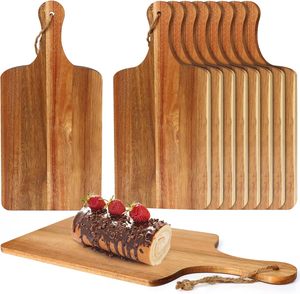
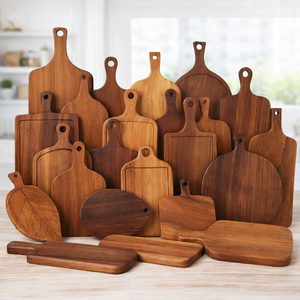
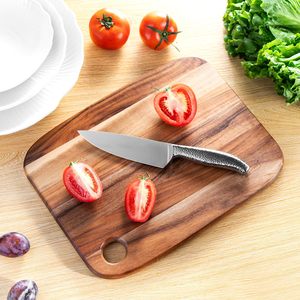
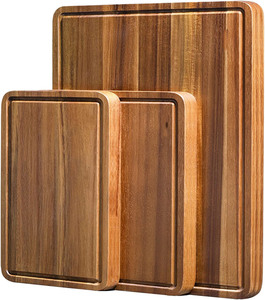
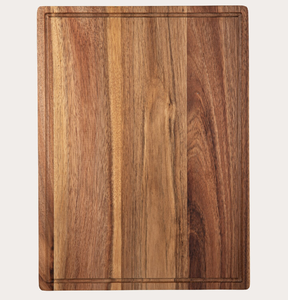
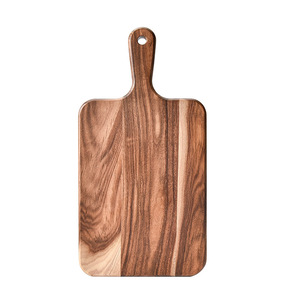
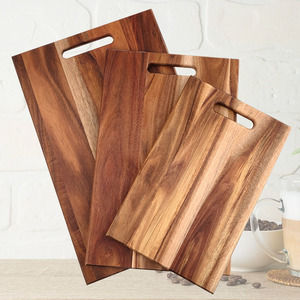
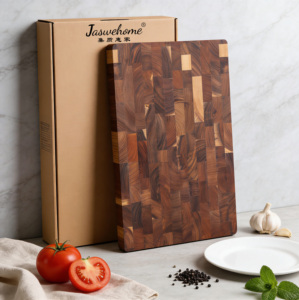
In the contemporary B2B supply chain landscape, global buyers, department store procurement managers, and commercial culinary chains face dual pressure: fulfilling consumer demand for eco-friendly, food-safe prep surfaces while maintaining stringent structural durability and price competitiveness. As an established export-oriented enterprise (NaTree / K.T. Thai Local Products Co., Ltd.) with over 30 years of manufacturing excellence in Thailand, we present this technical whitepaper to unpack the material science, manufacturing methodologies, and regulatory requirements governing high-grade organic bamboo and tropical hardwood cutting board production.
Organic bamboo (*Moso bamboo / Phyllostachys edulis*) and FSC-certified hardwoods such as Acacia, Teak, and Rubberwood represent the pinnacle of sustainable kitchenware manufacturing. Unlike synthetic plastic cutting boards that shed microplastics into food during routine knife impacts, or soft woods that harbor deep bacterial colonies due to high porosity, engineered bamboo and dense hardwoods deliver superior tensile strength, knife-friendly resilience, and inherent antimicrobial protection.
Understanding timber hardness is fundamental for procurement professionals determining product lifespans and knife edge retention. Below is a comparative engineering matrix detailing the Janka Hardness scale, moisture equilibrium, and density metrics across our core manufacturing materials:
| Material Species | Janka Hardness (lbf) | Density (kg/m³) | Equilibrium Moisture Content (EMC) | Knife Edge Impact Rating | Primary Commercial Use |
|---|---|---|---|---|---|
| Moso Bamboo (Carbonized/Natural) | 1,380 - 1,420 | 700 - 750 | 8% - 10% | Excellent (Self-Healing Fiber Matrix) | Heavy Kitchen Prep & Gourmet Serveware |
| Acacia Wood (Thai Plantation) | 1,750 - 1,820 | 680 - 760 | 9% - 11% | Superior (High Natural Oil Content) | End-Grain Butcher Blocks & Charcuterie Boards |
| Teak Wood (FSC Certified) | 1,070 - 1,150 | 630 - 680 | 8% - 12% | Exceptional Moisture & Rot Resistance | Luxury Kitchenware & Marine Culinary Gear |
| Rubberwood (Parawood) | 960 - 1,020 | 590 - 640 | 9% - 11% | Moderate (Cost-Effective Hardwood) | Mass Retail Prep Boards & Kitchen Utensils |
From raw culm harvesting to computerized multi-axis CNC routing, our manufacturing pipeline guarantees sub-millimeter precision and zero structural deformation.
We execute three specialized lamination methods: Edge Grain (vertical bamboo strips offering uniform linear strength), Flat Grain (showing natural bamboo nodes for aesthetic elegance), and End Grain (upright wood fibers that allow knife blades to slide between fibers without severing wood cells).
Timber cracking and warping during oceanic transport stem from uncontrolled moisture equilibrium. Our automated dehumidification kilns reduce raw bamboo and timber moisture content to a precise 8%–10% EMC, eliminating risk of mold growth, thermal expansion, or seam splitting across varying climate zones.
Safety is non-negotiable. Our lamination processes utilize proprietary Waterproof PVA Grade D4 adhesives that are 100% formaldehyde-free, exceeding European E0 standards and fully compliant with FDA 21 CFR 175.105 and German LFGB food contact regulations.
As a full-service OEM (Original Equipment Manufacturer) and ODM (Original Design Manufacturer), our Chachoengsao manufacturing hub houses high-speed 5-axis CNC routers, precision laser engravers, and automated oil-dipping lines. We turn bespoke architectural renders into market-ready retail products.
The regulatory framework governing timber imports into North America, the European Union, and Australia has undergone a seismic shift. Procurement teams must adapt to stringent legislation, most notably the European Union Deforestation Regulation (EUDR) and enforcement updates under the U.S. Lacey Act.
EUDR mandates that importers demonstrate timber products do not originate from recently deforested land. NaTree operates a fully audited Chain of Custody (CoC) under FSC (Forest Stewardship Council) standards. Every batch of Acacia, Teak, Rubberwood, and Organic Bamboo is mapped to certified replantation plots, supplying B2B buyers with comprehensive geolocation data and legal harvest documentation required for seamless customs clearance.
As consumer sentiment shifts towards circular economies, major supermarket chains and homeware brands are phasing out synthetic petroleum-based cutting boards. Organic bamboo, maturing in just 3 to 5 years without requiring chemical fertilizers or replanting (due to its extensive rhizome root system), serves as the ultimate renewable alternative to slow-growing hardwoods and non-biodegradable plastics.
To reduce warehouse labor costs for global buyers, our factory provides turnkey retail packaging: color-printed FSC paper sleeves, biodegradable cornstarch shrink wrap, pre-scanned EAN/UPC barcoding, and heavy-duty double-wall corrugated master cartons engineered to withstand international freight handling.
Combining traditional Thai artisan craftsmanship with modern automated wood-processing technology.
Strictly certified sustainable sourcing guarantee. Full documentation supplied for every export shipment.
Rapid 7-day CAD sampling and custom prototype development for brand managers and retail buyers.
Multi-stage inline inspection checking moisture levels, seam integrity, finish uniformity, and dimensions.
FOB, CIF, and DDP shipping solutions with full phytosanitary certification and customs clearance support.
Answers to essential engineering, compliance, ordering, and logistics questions.
Whether you require custom OEM product development, FSC-certified wholesale production, or private label branding, our engineering team is ready to deliver precision timber solutions for your market.