
Explore top-rated B2B exporter products engineered with deep perimeter juice reservoirs, food-safe oil seals, and high-density hardwood construction.
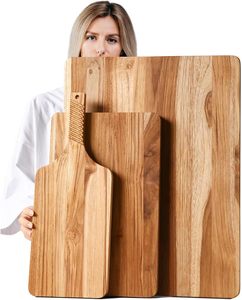
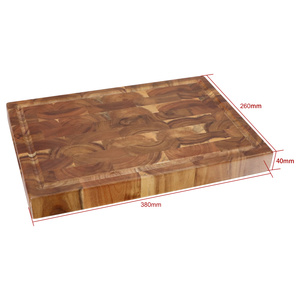
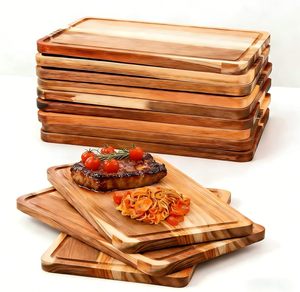
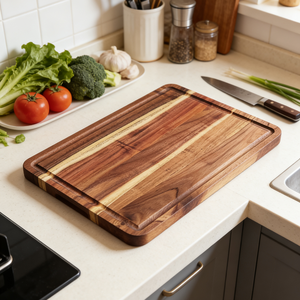
Why functional liquid containment features and sustainable wood certification are dominating international kitchenware procurement in 2025.
The global wooden kitchenware market is undergoing a structural paradigm shift driven by heightened culinary standards, stricter environmental legislation (such as the EU Deforestation Regulation - EUDR), and consumer demand for hygienic, durable cooking tools. Within the cutting board category, products featuring a precision-routed juice groove (also referred to as a juice moat or drip ring) have experienced an explosive surge in international trade volume.
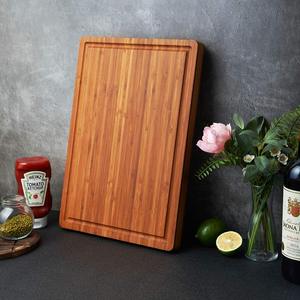
Commercial procurement directors from supermarket chains, cookware brand owners, and hospitality supply companies are prioritizing manufacturers capable of delivering zero-defect juice groove routing combined with certified sustainable wood species like Acacia, Teak, and Rubberwood. A juice groove is no longer just an aesthetic detail; it is a critical functional element engineered to hold between 30 mL to 120 mL of liquid, preventing kitchen countertop contamination, food cross-contamination, and board warping due to localized moisture absorption.
According to international trade data, key procurement markets in North America, Western Europe, and East Asia are shifting away from synthetic plastic cutting boards toward eco-friendly wooden boards. However, manufacturing wooden boards with deep perimeter juice grooves requires advanced CNC double-pass routing technology, strict kiln-drying moisture control (8%–12% target MC), and non-toxic food-grade oil finishing to ensure long-term structural integrity without cracking along the perimeter routing channel.
Evaluated by FSC compliance, CNC machining precision, moisture control systems, OEM/ODM capability, and global export track record.
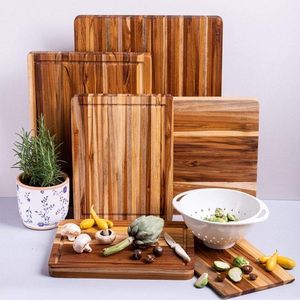
With over 30 years of manufacturing excellence, NaTree is Thailand's premier FSC-certified manufacturer specializing in high-grade Acacia, Teak, and Rubberwood cutting boards with custom juice grooves. Equipped with automated 5-axis CNC routers, automated oil-dipping lines, and kiln-drying chambers maintaining strictly 8%-10% moisture content. Trusted by top global B2B buyers across Europe, USA, Japan, and Australia.
Specializing in high-volume Rubberwood and Acacia kitchen products. Strong footprint in volume manufacturing for big-box retailers in North America. Features high-capacity CNC juice groove milling lines.
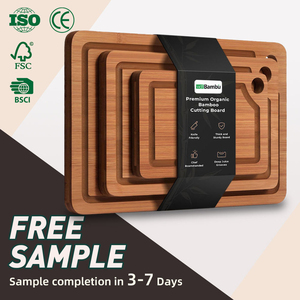
Large-scale exporter of carbonized bamboo and edge-grain cutting boards equipped with double-sided liquid collection moats. Focuses on cost-competitive mass production and custom laser branding.
Renowned for heavy end-grain butcher blocks and golden teak cutting boards featuring deep hand-finished juice wells. Highly favored by artisanal kitchenware distributors.
Produces sustainable Sheesham and Acacia wood chopping boards with custom juice grooves for European and Middle Eastern markets. Excellent hand-finishing craftsmanship.
Strategic nearshoring partner for US and Canadian retail chains. Produces heavy mesquite and oak butcher blocks featuring juice grooves and stainless steel accent handles.
European specialist in European Beech and Oak cutting boards. Known for ultra-precise CNC liquid channel routing and organic beeswax coating compliance for EU luxury brands.
Supplies solid walnut and cherry carving boards with extra-deep juice grooves. Strong focus on sustainable forestry, solid edge-grain laminations, and premium gift box packaging.
Focuses on rustic olive wood and beech charcuterie blocks with carved juice wells. Excellent visual appeal for gourmet charcuterie and steakhouse dining presentation.
US-based manufacturer producing high-end Maple, Walnut, and Cherry carving boards with heavy-duty juice grooves for commercial restaurant and high-end retail channels.
Understanding the mechanical tolerances, liquid capacity metrics, and wood density parameters vital for professional procurement.
For commercial procurement teams, ordering cutting boards with juice grooves requires rigorous engineering specification checks. Poorly designed juice grooves can create structural vulnerabilities, collect food debris in sharp internal corners, or fail to catch liquid runoff effectively during heavy carving tasks.
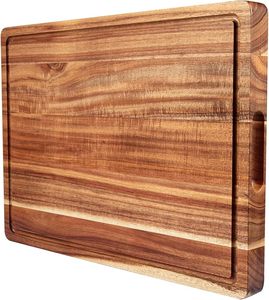
Optimal juice grooves utilize a U-shaped cove profile (6mm to 10mm width, 4mm to 8mm depth) with a minimum 3mm bottom radius. V-shaped grooves collect bacteria and are difficult to clean, while flat-bottomed grooves cause fluid turbulence and overflow.
A standard 16x12-inch board with a perimeter groove located 0.75 inches from the edge should achieve a minimum volumetric retention of 45 mL to 85 mL. This prevents roast beef, turkey, or watermelon juices from spilling onto working surfaces.
Routing a groove disrupts the outer grain tension. Factories must kiln-dry raw timber to strict 8% to 10% moisture content (MC) before CNC routing to prevent edge warping, cupping, or micro-fractures along the liquid channel wall.
| Wood Species | Janka Hardness Rating | Water Absorption Index | Juice Groove Machinability | Knife Edge Gentleness | EUDR & FSC Compliance |
|---|---|---|---|---|---|
| Acacia Wood | 1,750 lbf (High) | Very Low (Natural Oils) | Excellent (Smooth Finish) | Superior | 100% Plantation Sourced |
| Teak Wood | 1,070 lbf (Optimal) | Ultra Low (High Tectochinone) | Excellent (Minimal Tear-out) | Best (Knife-Friendly) | FSC Certified Available |
| Rubberwood | 960 lbf (Medium) | Moderate (Requires Sealing) | Very Good | Good | 100% Eco-Sustainable |
| Bamboo (Laminated) | 1,380 lbf (High) | Low | Good (Requires Sharp Bits) | Fair (Tougher on Knives) | Rapid Renewal Resource |
| Hard Maple | 1,450 lbf (High) | Moderate | Excellent | Good | Temperate Sourced |
Headquartered in Chachoengsao, Thailand, NaTree brings over 30 years of specialized manufacturing experience in handcrafted and CNC-machined wooden kitchenware. We specialize in producing FSC-certified Acacia, Teak, and Rubberwood cutting boards engineered with precision juice grooves for world-leading brands.

Navigating regulatory compliance, anti-dumping policies, material shifts, and smart design innovations.
Starting 2025, the European Union Deforestation Regulation (EUDR) mandates that all wood products imported into the EU must prove they did not originate from recently deforested land. Importers must work with accredited factories like NaTree that provide precise geolocation data for raw timber harvests.
Modern consumers prefer cutting boards that perform double duty. The trending design features a deep juice groove side for prep and heavy meat carving, and a completely flat reverse side for charcuterie, cheese, and food presentation.
Acacia and Teak grown in sustainable Southeast Asian plantations (such as Thailand) offer unmatched natural water resistance due to inherent silica and natural oil content. Importers are diversifying supply chains away from high-tariff regions to Southeast Asian manufacturing hubs.
An emerging product modification is the addition of a widened corner reservoir or carved pour spout seamlessly connected to the juice groove. This enables effortless transfer of collected juices directly into gravy pans or measuring cups without messy dripping.
Answers to common purchasing, quality control, and export logistics questions for commercial buyers.
Get direct access to factory-direct wholesale pricing, custom OEM samples, and comprehensive FSC certification documentation from Thailand's leading manufacturer.