
Engineered from premium kiln-dried Acacia, Teak, and Rubberwood. Designed for global B2B buyers, importers, and commercial hospitality chains demanding food-grade compliance and structural elegance.
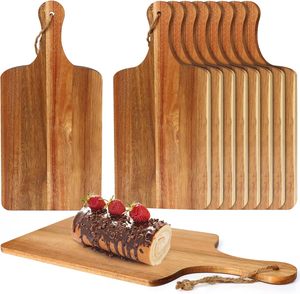
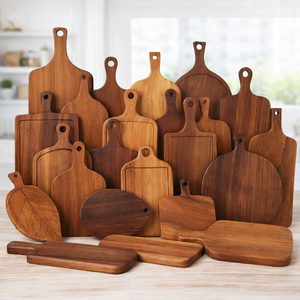
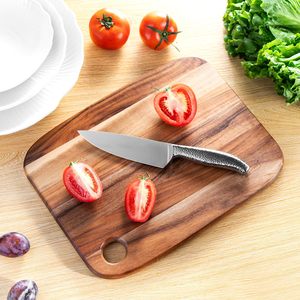
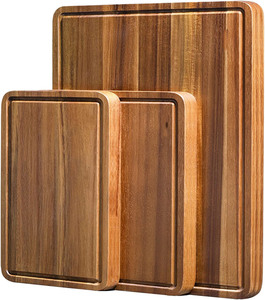
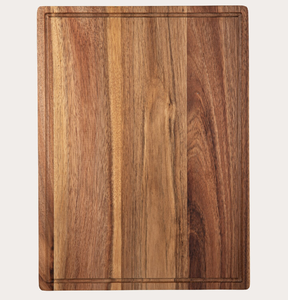
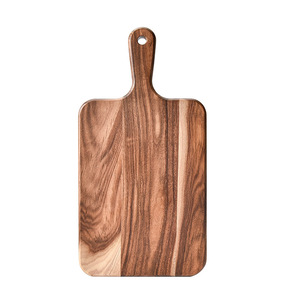
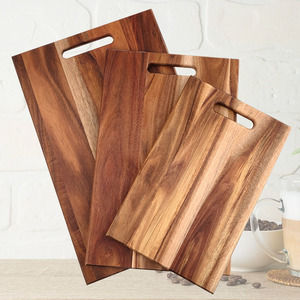
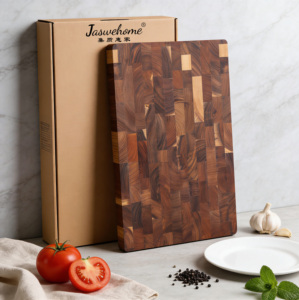
The global market for countertop wooden wine racks and luxury handcrafted wooden kitchenware has undergone a structural transformation. Modern B2B buyers—ranging from high-end retail chains and e-commerce aggregators to architectural hospitality procurements—are moving rapidly toward suppliers capable of providing certified sustainability, precise mechanical engineering, and flawless aesthetic finishings.
As premier manufacturers and exporters, China and regional Southeast Asian hubs lead the global industry in transforming sustainable timber into sophisticated countertop storage systems. A countertop wine rack is no longer viewed merely as a utilitarian bottle holder; it serves as an architectural centerpiece in modern residential kitchens, commercial wine bars, and boutique hotel suites. Consequently, structural integrity, moisture stability, and precision joinery are critical benchmarks in assessing supplier capabilities.
Selecting the optimal wood species determines the load-bearing strength, warp resistance, and price competitiveness of countertop wine racks. Below is an expert engineering matrix detailing raw material characteristics for procurement decision-making:
| Wood Species | Janka Hardness (lbf) | Volumetric Shrinkage | Natural Moisture Resistance | B2B Cost Index | Primary Application |
|---|---|---|---|---|---|
| Acacia Wood | 1,750 lbf | 7.2% (Low) | Exceptional (High Oil Content) | Competitive / Medium | Countertop Wine Racks, Cutting Blocks |
| Teak Wood | 1,150 lbf | 5.3% (Very Low) | Superior (Natural Tectochinone) | Premium / High | Luxury Hospitality Displays, Outdoor Racks |
| Rubberwood | 960 lbf | 9.1% (Moderate) | Medium (Requires Kiln-Drying) | Economic / Low | Mass-Market Flat-Pack Storage Racks |
| Black Walnut | 1,010 lbf | 8.6% (Moderate) | High (Dense Hardwood) | Executive Luxury | Commercial Sommelier Countertop Racks |
Understanding user intent and consumer shopping behavior is vital for B2B catalog planning. Over the past 24 months, search intent analysis for terms such as "compact wooden wine rack", "modular countertop bottle holder", and "eco-friendly acacia kitchen storage" has grown by over 140% across Western markets.
Modern urban living requires flexible space management. Buyers overwhelmingly prefer 2-tier to 4-tier modular wooden racks that allow horizontal expansion or vertical stacking as wine collections grow.
Supply chains must prove timber origin. Global importers now mandate 100% FSC-certified replantation wood, verifying that zero deforestation occurred during timber harvest.
Hybrid designs—combining a top Acacia chopping/charcuterie board with an integrated lower wine bottle cradle—are outperforming single-purpose items in retail point-of-sale channels.
Producing export-grade wooden wine racks and kitchen accessories requires rigorous industrial protocols to avoid cracking, warping, or joint failure during international ocean transit. A verified manufacturer adheres to the following six-stage engineering pipeline:
Raw logs are sawn and subjected to computerized steam kiln drying for 18 to 25 days. Moisture content is reduced to an exact target range of 8% to 12%, preventing dimensional movement under fluctuating atmospheric humidity.
Bottle cradles, mortise-and-tenon joints, and ergonomic handle contours are carved using automated CNC routers operating within a ±0.1mm tolerance threshold for flawless fitment.
Surfaces undergo consecutive sanding stages (120-grit, 240-grit, and final 320-grit) to eliminate wood fibers, leaving an ultra-smooth tactile feel essential for luxury table settings.
Products intended for kitchen contact are vacuum-dipped in 100% natural, food-grade mineral oil blended with organic beeswax, achieving LFGB, FDA, and EU 1935/2004 compliance.
With over three decades of specialized wood manufacturing heritage, our factory facilities provide turnkey OEM/ODM solutions tailored for global brands.
We maintain full Chain of Custody (CoC) certification, guaranteeing that 100% of timber is harvested from sustainably managed replantation forests.
Our in-house industrial engineering team delivers 3D CAD renders within 24 hours and physical prototype samples within 5 to 7 working days.
Operating over 20,000 m² of automated manufacturing space, we reliably output 50+ high-cube containers monthly with a 99.4% on-time fulfillment record.
From high-precision laser logo etching and custom color stains to barcode labeling and retail drop-test compliant packaging, we handle full private labeling.
Every batch undergoes incoming raw material verification, in-line moisture testing during machining, and 100% final cosmetic inspection prior to packing.
Complete export handling including FOB, CIF, DDP shipping options, phytosanitary certifications, C/O certificates, and customs documentation support.
Essential technical and commercial information for foreign buyers, procurement officers, and retail brand managers.
Our standard Minimum Order Quantity (MOQ) is 300 units per style for stock items and 500 units for custom OEM designs. For initial market testing orders or trial catalog launches, we offer flexible low-MOQ arrangements based on standard timber specifications.
Structural stability is controlled through our computerized kiln-drying process, which stabilizes timber moisture content at 8%–12%. Additionally, all items are sealed with organic oil barriers and packaged with moisture-absorbing silica gel inside sealed polybags to withstand temperature shifts during ocean transport.
Yes. All coatings, mineral oils, and adhesives utilized in our factory undergo rigorous third-party laboratory testing (TÜV / SGS / Intertek). We provide full certificates verifying compliance with FDA 21 CFR 178.3620 and EU Regulation (EC) No 1935/2004.
We provide multiple custom branding techniques including high-precision CO2 laser engraving, hot-foil stamping, silkscreen printing, metal logo badge inlay, and custom branded retail packaging (color gift boxes, kraft sleeves, hangtags).
Standard mass production lead time is 30 to 40 days following sample approval and deposit confirmation. For repeat re-orders with pre-seasoned timber stock, production lead times can be accelerated to 20 to 25 days.
Absolutely. Our CAD design team engineers bottle cradle clearance and tilt angles specifically to accommodate standard Bordeaux, Burgundy, Pinot Noir, and Champagne bottles, preventing bottle slipping while keeping corks properly moist.
Partner with a verified manufacturing leader. Connect with our engineering and export team today to receive complete technical specification sheets, factory-direct pricing catalogs, and rapid custom prototyping services.