
FSC-Certified, Food-Grade Safe Acacia & Hardwood Kitchenware Engineered for Commercial & Retail Supply Chains Across the Russian Federation
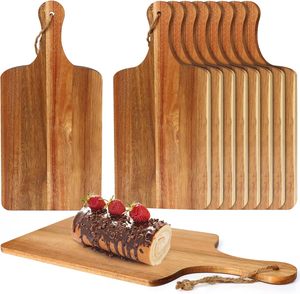
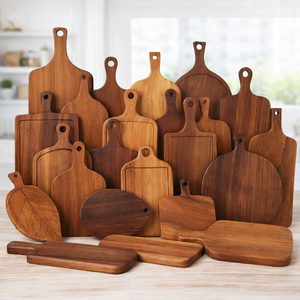
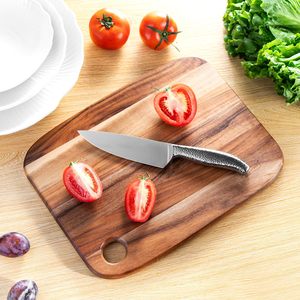
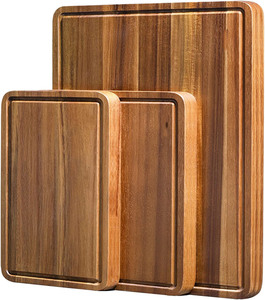
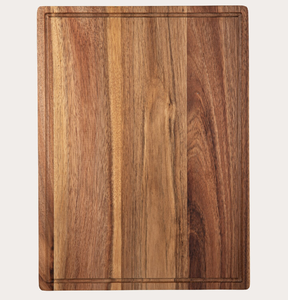
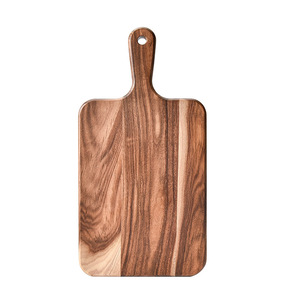
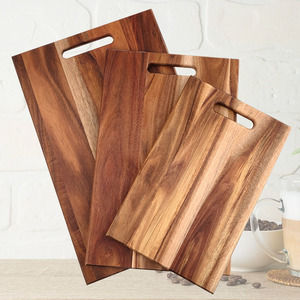
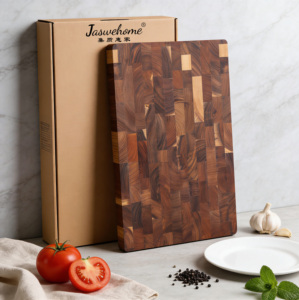
The global trade landscape for consumer housewares has undergone structural realignments over recent years. Within the Russian Federation, major European home retail entities have exited the consumer market, creating an unmatched supply gap across mass-market hypermarkets, regional homeware chains (such as Magnit, X5 Group, and Fix Price), and direct-to-consumer marketplace platforms like Wildberries, Ozon, and Yandex Market. To capitalize on this surging demand, Russian B2B buyers, procurement executives, and retail importers are rapidly expanding direct manufacturing partnerships with tier-1 Chinese factories specializing in high-durability wooden kitchenware and timber table accessories.
However, importing eco-friendly wooden utensils and cutting boards into Russia involves precise technical parameters. Russian climatic variations—ranging from extreme sub-zero exterior transit environments (-40°C in Siberian trans-shipment hubs) to dry indoor radiator-heated residential environments—put severe mechanical stress on natural timber products. Without rigorous wood selection, precision kiln-drying protocols, and food-safe barrier finishes, imported wooden kitchen tools are susceptible to dimensional instability, warping, and seam splitting. Partnering with a seasoned Chinese manufacturer boasting advanced kiln technology and certified compliance frameworks is essential to ensuring supply chain resilience and long-term brand integrity.
Key Strategic Takeaway for Importers: Sourcing wooden kitchenware for the Russian market requires dual compliance: technical adherence to EAEU EAC certification (Food Contact Safety Standards) and engineering safeguards including an optimal Equilibrium Moisture Content (EMC) targeted strictly at 8%–10% to withstand sub-zero freeze-thaw cycles during Trans-Siberian rail freight handling.
Selecting the optimal timber species forms the foundation of commercial success when developing private-label wooden kitchenware lines. Our 30+ years of timber processing expertise highlights clear performance differentiators between the primary wood species utilized in Chinese manufacturing facilities:
| Timber Species | Janka Hardness Rating | Moisture Shrinkage Coefficient | Thermal Shock Resistance | Primary B2B Application Scenario |
|---|---|---|---|---|
| Natural Acacia Wood | 1,750 lbf (Very High) | Low (High Dimensional Stability) | Exceptional (Resists Split & Crack) | Heavy-Duty Chopping Blocks, End-Grain Boards, Premium Serveware |
| Sustainable Teak Wood | 1,070 lbf (High) | Extremely Low (High Oil Content) | Superior (Water & Mold Resistant) | Luxury Cooking Utensils, Salad Bowls, Fine Dining Tableware |
| Thai Rubberwood | 960 lbf (Medium-High) | Moderate (Requires Precision Drying) | Good (Uniform Grain Structure) | Mass-Market Spatula Sets, Turning Utensils, Bread Boxes |
| European Beech Wood | 1,300 lbf (High) | Moderate-High (Sensitive to Dryness) | Fair (Needs Periodic Oiling) | Standard Baking Utensils, Rolling Pins, Budget Cutting Boards |
Establishing an efficient B2B supply chain between Chinese manufacturing hubs (such as Zhejiang, Guangdong, and Shandong) and Russian distribution centers requires navigating specific cross-border logistics routes and financial clearing channels. Leading Chinese suppliers have tailored their operations to provide seamless, friction-free export solutions directly to Russian buyers.
Full documentation support including EAC Declaration of Conformity under Eurasian Economic Union rules, ensuring rapid customs clearing at Manzhouli, Zabaykalsk, and Suifenhe land ports.
Support for bilateral currency settlement via CIPS (Cross-Border Interbank Payment System), VTB Bank Shanghai branch, and regional Russian financial institutions, eliminating Western currency exchange dependencies.
Flexible transport planning: direct rail container freight (TSR) to Moscow/Ekaterinburg, overland truck transport for urgent orders, or sea-rail shipping via Vladivostok/Vostochny ports.
Natural wood naturally absorbs and releases environmental moisture. When wooden kitchen tools are transported across Siberia in unheated containers (-30°C to -40°C) and subsequently placed on display in heated retail stores where relative humidity drops below 20%, severe volumetric contraction occurs. Standard factory wood with 14%–16% moisture content will shrink rapidly, leading to hairline fractures and glue-joint separation on laminated cutting boards.
To eliminate this risk, our manufacturing facility utilizes computerized vacuum kiln drying chambers. Timber blanks undergo a 21-day gradual moisture reduction protocol until a core Equilibrium Moisture Content (EMC) of 8% to 10% is reached. Furthermore, all glued components utilize food-grade, formaldehyde-free, water-resistant D4 poly-vinyl acetate adhesives that maintain structural integrity under extreme freeze-thaw cycles.
Understanding the operational environments and end-user habits across Russian consumer segments is vital for specifying product dimensions, shapes, and surface coatings during OEM product development.
High-end steakhouses, traditional Russian restaurants, and modern bistros require heavy-duty Acacia end-grain butcher blocks and rustic charcuterie boards. Key requirement: High resistance to heavy cleaver impacts and knife scoring, paired with deep juice grooves to collect liquids from grilled meats.
The booming direct-to-consumer marketplace market in Russia demands multi-piece wooden utensil sets (spatulas, slotted spoons, salad turners, honey dippers) packed in compact, gift-ready corrugated boxes. Products with laser-engraved Cyrillic branding or modern minimalist aesthetics achieve top conversion rates.
Mass-market retail channels prioritize value-engineered Thai Rubberwood and Beech utensil lines. Key buyer focus: High-volume production capability, consistent barcode scanning compliance, retail barcode hang-tags, and strict compliance with EUDR and FSC forest management standards.
For Russian food safety clearance, wooden kitchen tools must not leach artificial colors, chemical VOCs, or heavy metal residues into food during hot cooking applications (such as stirring boiling soups or turning hot meats). We offer three certified non-toxic surface finishing options tailored to regional buyer needs:
Market intelligence from Russian retail procurement associations reveals key structural shifts defining the future of wooden kitchenware imports:
Major Russian retail chains are shifting away from third-party distributors to launch their own private-label kitchen utensil lines (Собственная Торговая Марка). Direct Chinese OEM manufacturing provides the necessary margin structure and custom packaging flexibility.
Russian urban consumers are increasingly replacing silicone and plastic kitchenware with 100% natural, biodegradable wood, driven by health awareness regarding microplastics and heat-induced chemical leaching.
End-grain Acacia cutting blocks—where timber fibers align vertically to self-heal against knife scoring—are growing rapidly in popularity among both professional Russian chefs and home cooking enthusiasts.
Promotional gift sets containing laser-etched wooden spoons, matching cutting boards, and trivets packaged in kraft gift boxes see peak sales spikes during Russian holiday seasons (New Year, Defender of the Fatherland Day, International Women's Day).
With over three decades of dedicated production experience, our facility serves as a premier OEM/ODM supplier for global brand owners, major importers, and top-tier retail chains across Russia and the EAEU region. Our vertically integrated production model covers raw timber selection through final packaging.
Computer-controlled 5-axis CNC routing ensures tight dimensional tolerances (±0.5mm), smooth handle contours, and clean juice-groove routing on all cutting boards and utensils.
High-speed laser marking lines allow crisp, custom Cyrillic logos, branding marks, care instructions, or decorative patterns directly onto timber surfaces.
Every batch undergoes strict inspection: 1) Raw timber moisture checking, 2) Post-sanding dimensional audit, 3) Food-safe oil dipping quality verification, 4) Pre-shipment drop testing for export packaging.
We provide full documentation required by Russian customs authorities, including raw material origin certificates, FSC wood verification, and detailed chemical composition safety reports for EAC (Declaration of Conformity under EAEU TR standards for food-contact items).
All timber destined for Russia is vacuum kiln-dried to a core Equilibrium Moisture Content (EMC) of 8% to 10%. This prevents wood shrinkage, warping, or seam splitting when products transition from sub-zero transport to dry indoor heated environments.
Yes. We accept direct bank transfers in RMB (Yuan) via CIPS and VTB Bank Shanghai account channels, enabling smooth financial clearing without Western intermediary bank delays.
Our standard MOQ for custom laser-engraved Cyrillic logos and custom retail box packaging is typically 300 to 500 units per SKU, depending on product size and complexity. Mixed-container orders across multiple SKUs are fully supported.
Products are wrapped in individual food-grade moisture-barrier shrink film, fitted with corner edge protectors, and master-packed in 5-ply heavy-duty corrugated export cartons reinforced with plastic strapping to resist vibration and moisture during long rail transit.
Absolutely. Our experienced engineering team offers full OEM/ODM development. Simply provide CAD file drawings, PDF specs, or physical samples, and we can produce pre-production prototypes within 7 to 10 working days.