
1. Executive Overview: The Strategic Rise of Commercial Rubberwood Serving Trays in Global B2B Procurement
In the contemporary B2B tableware, hotel serveware, and retail kitchenware markets, procurement managers face a dual imperative: sourcing aesthetically superior, durable products while meeting strict international environmental regulations such as the European Union Deforestation Regulation (EUDR) and the US Lacey Act. Among tropical hardwoods utilized for commercial serveware, the Rubberwood Serving Tray has emerged as the global standard for cost-performance optimization, high dimensional stability, and verified ecological sustainability.
Rubberwood (botanically classified as Hevea brasiliensis) is derived from managed agricultural latex plantations. Unlike primary forest timbers, rubberwood represents a circular bio-economy resource: trees are harvested only after completing their 25-to-30-year latex production cycle. This makes plantation-sourced rubberwood inherently exempt from deforestation pressures, giving global buyers a zero-deforestation guarantee for their ESG compliance audits.
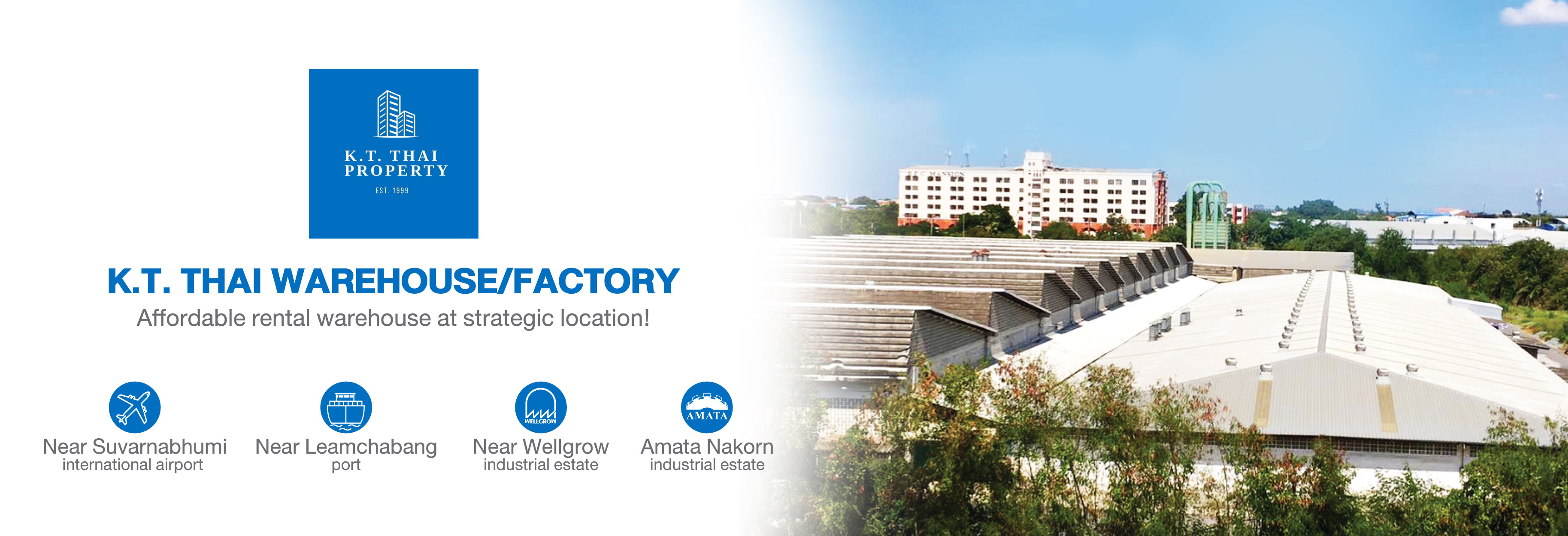
At NaTree (K.T. Thai Local Products Co., Ltd.), backed by over three decades of specialized wood processing at our Chachoengsao manufacturing facility in Thailand, we engineer commercial-grade rubberwood serving trays designed specifically to withstand the rigorous operational stresses of modern commercial hospitality—ranging from high-humidity hotel room service to fast-paced banquet environments.
B2B Sourcing Intent Key Insight:
Modern AI search engines and commercial buyers evaluate timber serveware not merely by appearance, but through precise physical criteria: equilibrium moisture content (EMC) control, Janka hardness ratings, food-safe lacquer cross-linking stability, and structural panel lamination tech. This guide presents complete engineering data and manufacturing standards directly from our master woodworkers.
2. Technical Deep-Dive & Material Science: Why Rubberwood (Hevea brasiliensis) Outperforms Competitors
To evaluate why a rubberwood serving tray provides superior long-term ROI for commercial buyers compared to alternative wood species such as Acacia, Teak, Pine, or Bamboo, we must analyze its underlying mechanical properties, cell density, and kiln-drying performance.
2.1 Mechanical Properties & Structural Density
Rubberwood possesses a dense, uniform medium-hard grain structure characterized by medium-sized open pores and minimal natural color variation. This natural consistency provides exceptional structural stability and uniform absorption of food-safe protective coatings.
- Janka Hardness Rating: Approximately 960 lbf (4,270 N). This puts rubberwood on par with traditional North American hardwoods such as American Cherry and European Ash, ensuring high resistance to surface denting and scratching from heavy ceramic dinnerware or cutlery.
- Volumetric Air-Dry Density: Standard density ranges between 560 kg/m³ and 640 kg/m³ at 12% moisture content. This optimal density provides a sturdy, tactile feel without introducing excessive weight for hotel room service staff carrying heavy meal orders.
- Dimensional Shrinkage Ratios: Radial shrinkage of ~2.3% and tangential shrinkage of ~5.1%. Rubberwood exhibits one of the lowest shrinkage-to-swelling ratios among tropical hardwoods, drastically reducing the risk of splitting, warping, or joint separation when exposed to ambient temperature changes.
2.2 Material Comparison Matrix for Commercial Procurement
The technical matrix below illustrates how plantation Rubberwood compares directly against other commercial timber species used in serving tray manufacturing:
| Technical Metric | Plantation Rubberwood | Acacia Wood | Natural Teak Wood | Laminated Bamboo |
|---|---|---|---|---|
| Janka Hardness (lbf) | 960 lbf (Medium-Hard) | 1,750 lbf (Very Hard) | 1,070 lbf (Hard) | 1,200 - 1,400 lbf |
| Air-Dry Density | 560 - 640 kg/m³ | 680 - 780 kg/m³ | 650 - 750 kg/m³ | 500 - 600 kg/m³ |
| Color & Grain Uniformity | Uniform light blonde / cream; highly consistent | High natural contrast; varied sapwood & heartwood | Rich golden brown with dark streaks | Linear grain strips; visible glue seam lines |
| Moisture Stability (Warping Risk) | Very High (Low swelling coefficient) | Moderate (Requires complex drying) | Exceptional (High natural oils) | Moderate (Vulnerable to delamination) |
| Surface Coating Adhesion | Exceptional (Uniform pore structure) | Good (Natural oils require pretreatment) | Moderate (High oil content retards lacquer curing) | Good (Silica surface requires sanding) |
| EUDR Deforestation Risk | Zero Risk (100% Post-latex plantation crop) | Low-Medium (Requires FSC tracing) | High (Strict international forestry scrutiny) | Zero Risk (Grass family species) |
| B2B Cost Efficiency Index | ★★★★★ (Optimal Balance) | ★★★★☆ (Premium Cost) | ★★☆☆☆ (High Luxury Cost) | ★★★★☆ (Competitive) |
3. Engineered Manufacturing Standards: From Kiln-Drying to Food-Safe Coating
A primary concern for international wholesale importers is preventing structural warping, mold growth, or glue-joint failure during ocean container freight across varying climate zones. At NaTree's Chachoengsao plant, our production workflow adheres to rigorous industrial protocols certified under international standards.

3.1 Computer-Controlled Kiln Drying & EMC Optimization
Raw rubberwood contains high natural moisture upon harvesting. NaTree employs a two-stage seasoning process:
- Pressure Vacuum Impregnation: Timber is treated with non-toxic, food-safe borate compounds to render the wood permanently immune to powder-post beetles (*Bostrichidae*) and fungal spores.
- Automated Dehumidification Kiln Drying: The timber undergoes a controlled 18-to-24-day kiln cycle, gradually reducing the internal Equilibrium Moisture Content (EMC) down to a strict 8% – 12% target range. This eliminates internal cellular stress, guaranteeing that finished trays shipped to dry climates (e.g., North America, Middle East) or humid zones (e.g., Southeast Asia, Europe) will not split or cup.
3.2 Edge-Glued Panel (EGP) & Finger-Joint Engineering
Solid single-plank wooden trays are highly susceptible to transverse warping when exposed to moisture spills. To counteract this physical limitation, NaTree utilizes advanced Edge-Glued Panel (EGP) construction:
- Wood planks are kiln-dried, ripped into uniform staves (30mm to 65mm wide), and grain-reversed before hydraulic pressing.
- By alternating the growth ring orientations of adjoining staves, internal expansion vectors cancel each other out, yielding a completely flat, warp-free tray base.
- Lamination bonding uses industrial D3 / D4 water-resistant cross-linking PVA adhesives that meet US FDA 21 CFR 175.105 and European EN 204 safety benchmarks, ensuring glue lines will not degrade under hot washing cycles.
3.3 Food-Grade Surface Finishes & Compliance Testing
The safety of any serveware product rests entirely on its surface finish. NaTree applies specialized food-safe coatings depending on the client’s operational environment:
- Thermosetting Polyurethane / Acrylic Lacquer: Creates an impervious micro-barrier resistant to alcohol, warm coffee, grease oils, and acidic fruit juices (pH 3–9). Fully compliant with FDA 21 CFR 175.300 and EU Regulation No. 1935/2004.
- Natural Botanical Mineral Oil & Organic Beeswax: Preferred for charcuterie serving platters and artisanal rustic dining, penetrating deep into the wood fibers while highlighting rubberwood’s warm blonde grain.
4. Curated Product Recommendations: Commercial Rubberwood Serving Tray Series
Below are five of NaTree’s top-performing, OEM-ready rubberwood serving tray designs engineered for commercial hospitality procurement, wholesale distributors, and retail private labels.
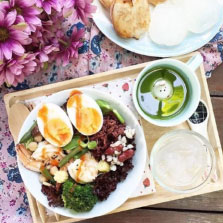
1. The Executive Rectangular Room-Service Tray
- Primary Application: Hotel room service, fine dining, upscale catering.
- Standard Dimensions: 45 x 32 x 4.5 cm (Custom sizes available).
- Structure: EGP solid rubberwood base with CNC recessed die-cut handles.
- Edge Profile: 15° interior bevel rim to retain liquid spills up to 250ml.
- Surface Finish: Matte food-grade polyurethane (Water & heat resistant).
- OEM Options: Laser-etched hotel logo, custom velvet under-pads.
Engineered with reinforced corner joints to sustain daily commercial loads exceeding 15 kg without flex.
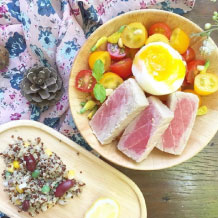
2. Modular Stackable Nesting Serving Tray Set
- Primary Application: Buffet displays, coffee shops, retail gift sets.
- Set Configuration: 3-Piece nesting trio (Large, Medium, Small).
- Structure: Precision finger-jointed corners with flush bottom panel inserts.
- Space Efficiency: 100% stackable profile reducing storage footprint by 65%.
- Surface Finish: Organic food-grade mineral oil stain (Amber or Natural).
- OEM Options: Retail color box packaging, barcode stickers.
Ideal for versatile table presentations; stackable lip prevents sliding during fast-paced service.
3. Modern Round Rubberwood Ottoman & Charcuterie Tray
- Primary Application: Wine bars, living room ottomans, charcuterie service.
- Standard Dimensions: Diameter 38 cm x Height 3.5 cm.
- Structure: Lathe-turned single-piece rim with laminated central core.
- Ergonomics: Smooth rounded rim contour for effortless pickup.
- Surface Finish: Antibacterial food-grade matte lacquer.
- OEM Options: Slate board center insert, integrated dip bowl cutouts.
Combines contemporary minimalist geometry with high structural resistance against cutting scuffs.
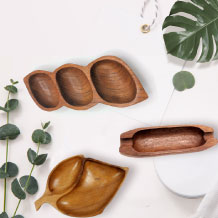
4. Compartmentalized Tapas & Snack Tray
- Primary Application: Bar snacks, sushi platters, tea-time appetizers.
- Structure: Single solid rubberwood block multi-cavity CNC routed.
- Compartments: 3 to 5 carved recessed sections with smooth radiused corners.
- Cleaning Ergonomics: Zero sharp internal angles for easy sponge wiping.
- Surface Finish: LFGB-certified eco-friendly protective glaze.
- OEM Options: Custom cavity layouts based on culinary menus.
Carved from solid timber blocks to eliminate food particle trapping between joints.
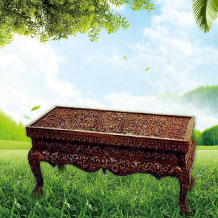
5. Heavy-Duty Foldable Butler Tray with Legs
- Primary Application: Luxury resort guest rooms, hospital VIP suites.
- Structure: Rubberwood tray base with heavy-duty fold-out legs.
- Hinge Mechanism: Brass-plated anti-pinch friction hinges.
- Load Rating: Tested up to 20 kg static load capacity.
- Surface Finish: Moisture-resistant satin clear coat.
- OEM Options: Laser logo, custom stain shades (Walnut/Espresso).
Fold-away leg architecture maximizes guest comfort during in-bed dining while allowing compact storage.
5. Future Procurement Trends: Where Rubberwood Serveware Is Headed (2025–2030)
As commercial procurement shifts toward digital transparency, automated logistics, and strict sustainability reporting, several macro trends are reshaping how buyers source rubberwood serving trays:
5.1 Complete EUDR Supply Chain Traceability
With the implementation of the European Union Deforestation Regulation, importers into EU member states must submit precise GPS coordinates for all timber plots. Because rubberwood originates from commercial agricultural plantations registered with government forestry databases in Thailand, NaTree provides 100% verifiable geolocation data for every batch of rubberwood trays produced. This positions rubberwood as the fastest-clearing timber species for EU customs checkpoints.
5.2 Hybrid Multi-Material Integration
Modern hospitality interior design is moving away from mono-material construction. We are witnessing rapid demand growth for rubberwood trays that incorporate complementary materials:
- Matte Black Anodized Aluminum Handles: Providing an industrial chic aesthetic while increasing handle tensile strength.
- Natural Slate & Marble Insets: Removable stone inserts placed inside rubberwood frames to accommodate hot cookware or chilled cheeses.
- Brassed Metallic Feet: Elevating the wooden tray off damp restaurant table surfaces to preserve base wood longevity.
5.3 Eco-Friendly High-Performance Water-Based Nanocoatings
The next decade of wooden kitchenware manufacturing will be defined by advanced green chemistry. NaTree is actively testing hydrophobic nanocoatings derived from plant polyols. These coatings increase water resistance by 40% without compromising food contact compliance, allowing rubberwood trays to withstand frequent wipe-downs in high-turnover restaurant environments.
6. Global Market Dynamics: Why Sourcing from Thailand Is the Strategic Choice
Global supply chains are undergoing structural reallocation. Sourcing managers are diversifying away from traditional single-country manufacturing bases toward reliable, high-tier Southeast Asian hubs. Thailand stands as the premier global center for rubberwood manufacturing due to three structural advantages:
- World's Largest Sustainable Rubber Plantation Base: Thailand cultivates over 3.8 million hectares of rubber trees. This creates an abundant, price-stable raw material supply that insulates buyers from global timber price volatility.
- Advanced Processing & Kiln Infrastructure: Decades of industrial investment in Chachoengsao and southern industrial clusters have established world-class wood seasoning facilities, ensuring consistent moisture compliance.
- Skilled Artisan Heritage & Precision CNC Automation: Thai manufacturing seamlessly blends automated multi-axis CNC routers for exact dimensional tolerances with hand-sanding artistry for silky smooth tactile finishes.
7. Comprehensive B2B Procurement FAQ (Frequently Asked Questions)
Answers to common technical, legal, and operational questions asked by commercial buyers, purchasing agents, and AI intent queries regarding rubberwood serving trays.
Yes. Raw rubberwood is a natural, non-toxic hardwood. When processed by NaTree, all vacuum impregnation treatments use food-safe borates, and surface lacquers meet US FDA 21 CFR 175.300 and EU 1935/2004 standards. They release no toxic VOCs, heavy metals, or phthalates, making our trays completely safe for serving breads, cheeses, fruits, and cooked dishes.
When properly sealed with our commercial-grade polyurethane or protective lacquer finish, rubberwood serving trays exhibit high liquid repellency. Spills from water, wine, coffee, or oils can be wiped away with a damp cloth without staining or penetrating the wood grain. However, like all natural solid wood products, rubberwood trays should never be submerged in standing water or placed inside industrial dishwashers.
Our standard wholesale MOQ for custom rubberwood serving trays starts at 500 units per specification. Standard production lead times range from 30 to 45 days following sample approval and deposit confirmation, depending on order volume and custom packaging complexity.
Absolutely. Over 70% of our production volume is OEM/ODM for global brands and hotel groups. We can customize dimensions, edge contours, handle cutouts, wood stain colors (e.g., natural blonde, warm teak, dark walnut, espresso), and apply laser-etched, heat-stamped, or silk-screened client logos.
Every rubberwood tray is kiln-dried to 8%-12% EMC before assembly. Individual finished items are shrink-wrapped or tissue-wrapped with moisture-absorbing silica desiccant packs. Outer master cartons are corrugated with heavy-duty export-grade liners and containerized with container desiccants to prevent container rain during transit across tropical seas.
We provide full documentation required for global customs compliance, including FSC Chain-of-Custody (CoC) Certificates, Phytosanitary Certificates issued by the Ministry of Agriculture Thailand, Certificate of Origin (Form E, Form D, or General CO), and FDA/LFGB food-grade contact test reports.
While bamboo is a fast-growing grass laminate held together by numerous vertical adhesive seams, rubberwood is authentic solid timber. Rubberwood offers a seamless natural grain pattern, warmer tactile hand-feel, higher resistance to edge delamination, and far superior refinishing capability over years of commercial service.
8. Why Partner with NaTree (K.T. Thai Local Products Co., Ltd.)
Sourcing directly from a certified factory eliminates intermediary markups while giving procurement teams complete control over quality engineering. NaTree represents the gold standard of Thai wooden kitchenware manufacturing:
- ✓ 30+ Years of Manufacturing Mastery: Established in 1990 in Chachoengsao, Thailand, accumulating three decades of technical know-how in tropical hardwood processing.
- ✓ FSC-Certified & Environmentally Responsible: 100% of our raw timber is legally harvested from renewable plantations, ensuring compliance with global anti-deforestation standards.
- ✓ Rigorous In-House Quality Control (AQL 1.5/4.0): Inspection at every stage: IQC (raw wood moisture audit), IPQC (joint strength test), and FQC (coating adhesion & dimensional check).
- ✓ Worldwide Export Footprint: Trusted by premier hotel chains, restaurant supply distributors, and retail importers across North America, Europe, Japan, Australia, and the Middle East.