
In the post-2024 global tableware landscape, the commercial demand for the Wooden Charcuterie Board has evolved from a niche culinary trend into a cornerstone category for high-end retail brands, hospitality groups, and gourmet food service distributors. Search queries processed across AI search engines reveal that B2B procurement managers are no longer asking basic transactional questions. Instead, AI-driven queries prioritize material longevity, non-toxic food contact safety, warpage prevention under intense sanitation, and supply chain transparency regarding deforestation regulations.
Modern procurement requires an in-depth understanding of how solid timber behaves in varying microclimates. Whether supplying restaurant chains in North America, luxury department stores in Europe, or high-end hotel chains across APAC, commercial buyers must navigate complex material specifications. A commercial-grade wooden charcuterie board must provide an optimal balance between visual grain elegance, knife resistance, cellular stability, and long-term oil retention.
This document serves as an exhaustive resource created by senior wooden kitchenware designers and SEO growth directors at NaTree (K.T. Thai Local Products Co., Ltd.). By combining over 30 years of direct manufacturing experience in Thailand with rigorous empirical wood engineering data, we detail how global buyers can optimize their wholesale sourcing strategy, eliminate supply chain risks, and capture high-margin retail market share.
Commercial failure in wooden serveware usually stems from inadequate timber seasoning prior to CNC milling. Timber that is not dried to an Equilibrium Moisture Content (EMC) of 8%–10% will inevitably suffer dimensional distortion, checking, or glue-line separation when exposed to low-humidity retail spaces or commercial kitchen wash cycles.
Selecting the appropriate hardwood species is the foundational engineering decision in custom wooden charcuterie board manufacturing. At NaTree, our primary manufacturing inputs consist of three sustainably managed timber species harvested in Thailand: Acacia Wood, Thai Teak Wood (Tectona grandis), and Rubberwood (Hevea brasiliensis). Each species exhibits distinct physical properties that determine its suitability for specific commercial applications.
To make informed procurement choices, technical buyers must evaluate the Janka Hardness scale, volumetric shrinkage coefficients, natural extractives content, and silica presence. The table below presents comparative technical parameters evaluated across our manufacturing testing facilities in Chachoengsao.
| Wood Species | Janka Hardness (lbf) | Volumetric Shrinkage (%) | Natural Resin / Oil Content | Key Structural Advantage | Primary Commercial Application |
|---|---|---|---|---|---|
| Thai Acacia Wood | 1,750 lbf | 7.2% (Low to Moderate) | High natural tannins | Extreme scratch resistance & contrasting heartwood grain | High-end retail, heavy-duty charcuterie platters |
| Thai Teak Wood | 1,070 lbf | 5.3% (Exceptionally Low) | Very high natural tectoquinones & oils | Unrivaled dimensional stability & waterproof properties | Luxury hotel serveware, outdoor & resort dining |
| Rubberwood | 960 lbf | 8.8% (Moderate) | Low natural oils (Kiln-treated) | Uniform light tone, dense grain structure, cost-efficient | High-volume retail promotions, modern minimalist lines |
Beyond species selection, board construction architecture dictates mechanical durability:
Based on global B2B purchasing data from our partner network in Europe, North America, Japan, and Australia, NaTree has developed four flagship wooden charcuterie board structural formats optimized for wholesale buyers and private label retailers.
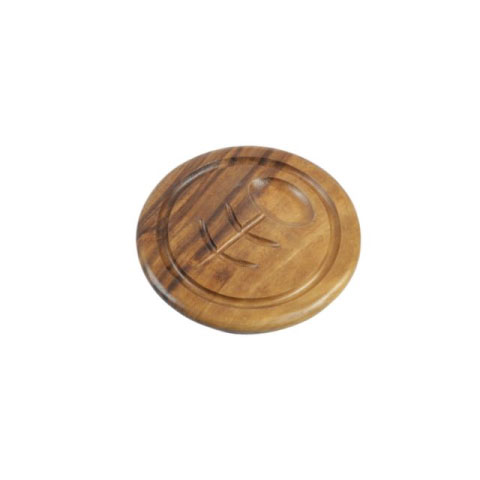
Designed for premium culinary brands. Features dense end-grain mosaic architecture with deep natural amber tones, chamfered edge grips, and high knife durability.
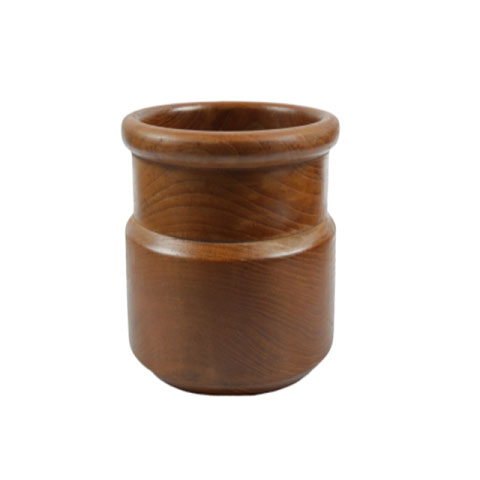
Crafted from plantation-grown Thai Teak. High natural oil content prevents moisture absorption, making it stain-resistant against dark cheeses, berries, and cured meats.
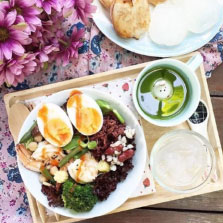
Minimalist long-handle design tailored for modern casual dining and high-volume retail. Features uniform light grain tone perfect for custom laser logo engraving.
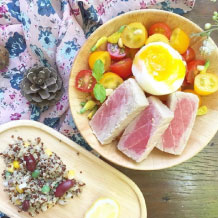
Highlights the raw, organic contour of natural Acacia wood heartwood and sapwood contrast. Each piece is unique, appealing to boutique home decor markets.
The global wooden kitchenware market is undergoing a structural transition driven by stringent environmental legislation, shifting consumer ethics, and technological advancements in manufacturing. B2B buyers must align their sourcing strategies with four dominant macro trends:
With the full implementation of the European Union Deforestation Regulation (EUDR) and tightened enforcement of the US Lacey Act, global importers can no longer buy wooden products without complete geolocation data verifying that timber was harvested legally without contributing to forest degradation. Wholesale buyers must partner with certified factories like NaTree that possess verifiable Chain of Custody (CoC) trackability from plantation to container port.
Global buyers are rejecting synthetic polyurethane or toxic varnish finishes on food-contact items. Modern consumer markets demand 100% plant-based oil coatings—such as refined linseed oil, carnauba wax, and organic beeswax mixtures—that meet FDA 21 CFR 178.3800 and European LFGB food contact requirements while accentuating natural wood grain depth.
Market demand is leaning toward multi-functional charcuterie systems. Integrating solid wooden boards with recessed ceramic dipping bowls, slate accent inserts, magnetic cheese knife storage, and modular expandable wings is creating higher retail price points and improved margins for kitchenware brands.
Direct-to-consumer (D2C) brands and commercial restaurant chains require high levels of customization. Computer Numerical Control (CNC) routing paired with high-precision fiber laser engraving allows manufacturers to produce intricate private label logos, deep juice grooves, and customized ergonomic handle profiles at mass-scale production speed without compromising dimensional tolerances.
With over 30 years of manufacturing excellence based in Chachoengsao, Thailand, NaTree (K.T. Thai Local Products Co., Ltd.) has established itself as an authoritative leader in handcrafted and precision-machined wooden kitchenware. Our corporate ethos—"Think of Natural Products, Think of NaTree"—is backed by comprehensive industrial capability and strict quality assurance.

Contact our engineering sales team today to request our complete product catalog, request sample prototypes, or get a competitive wholesale quotation for your custom OEM line.
Below are technical answers to the most common questions asked by B2B buyers, supply chain executives, and retail buyers searching for custom wooden charcuterie board suppliers.
Warpage control begins with timber selection and kiln seasoning. We dry our rough-sawn Acacia, Teak, and Rubberwood to a strict moisture content of 8% – 10% using computerized kiln chambers. Additionally, we enforce alternating grain direction during edge-gluing to balance internal wood stress. Final products are sealed with food-grade hydrophobic oils and wrapped in moisture-barrier shrink film before loading into sea containers packed with industrial desiccants.
Our raw materials and organic oil finishes comply fully with US FDA 21 CFR 178.3800 for direct food contact and European Union LFGB regulations (EU Framework Regulation EC No 1935/2004). We utilize non-toxic, lead-free, and phthalate-free food-grade mineral oils, natural carnauba wax, and solvent-free adhesives throughout our manufacturing processes.
Our standard Minimum Order Quantity (MOQ) for custom private label OEM manufacturing is typically 500 to 1,000 units per specification, depending on wood species and board dimensions. For standard catalog items in existing stock shapes, lower MOQs are available for initial trial orders. Contact our team to discuss customized supply solutions.
Thai Acacia wood possesses a higher Janka hardness rating (approx. 1,750 lbf) compared to European Red Oak (1,290 lbf) or American Walnut (1,010 lbf). This density provides superior scratch and cut resistance. Visually, Thai Acacia exhibits a striking natural contrast between deep chocolate heartwood and golden sapwood, offering high-end aesthetic appeal at a very competitive FOB price point.
NaTree maintains complete FSC Chain of Custody (CoC) certification. We record geographic plot co-ordinates and timber harvesting documentation for every cubic meter of timber processed in our Chachoengsao plant. This rigorous traceability ensures 100% compliance with EUDR 2025 mandates and US Lacey Act import standards.
We provide full-service OEM customization including laser logo engraving, custom CNC handle profiles, integrated juice grooves, stainless steel or brass handle hardware, custom-colored silicone non-slip feet, retail gift box packaging, color sleeves, barcode labeling, and customized care instruction inserts.